Settings, engineered

The Cathedral Setting, and the Arch Behind It

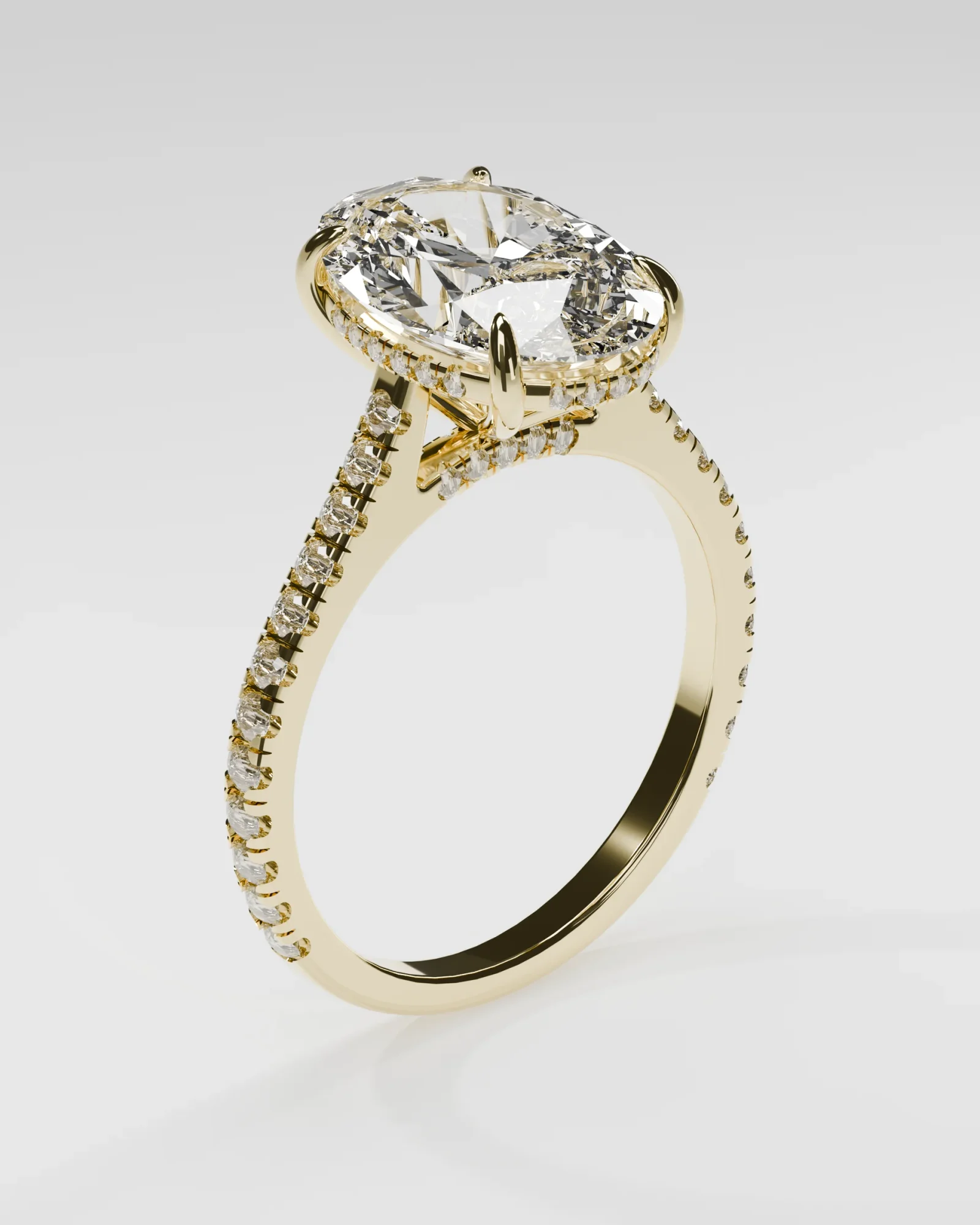
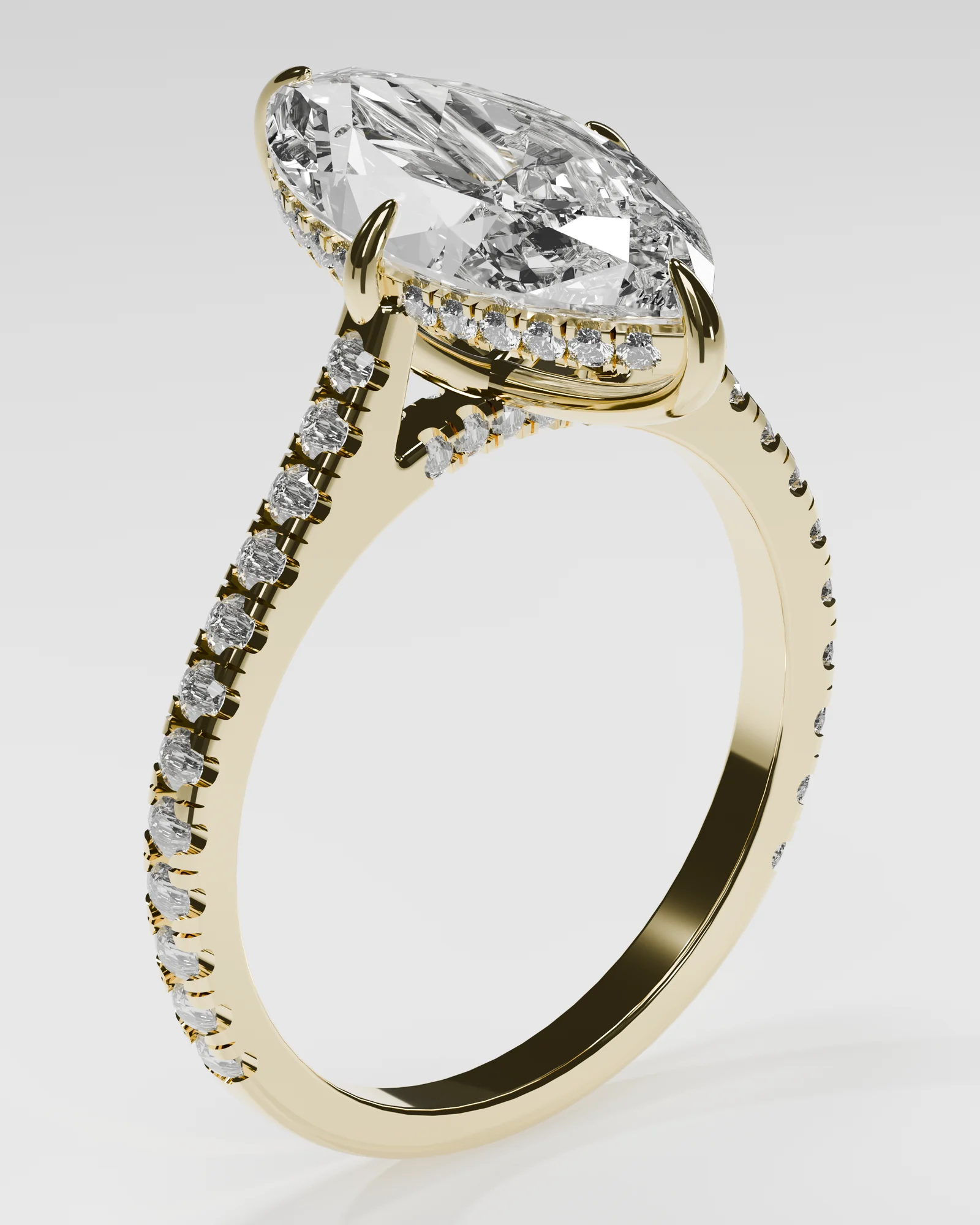
A cathedral setting raises the diamond on two arches that spring from the band. The idea is borrowed from building, and so is the reason it works.

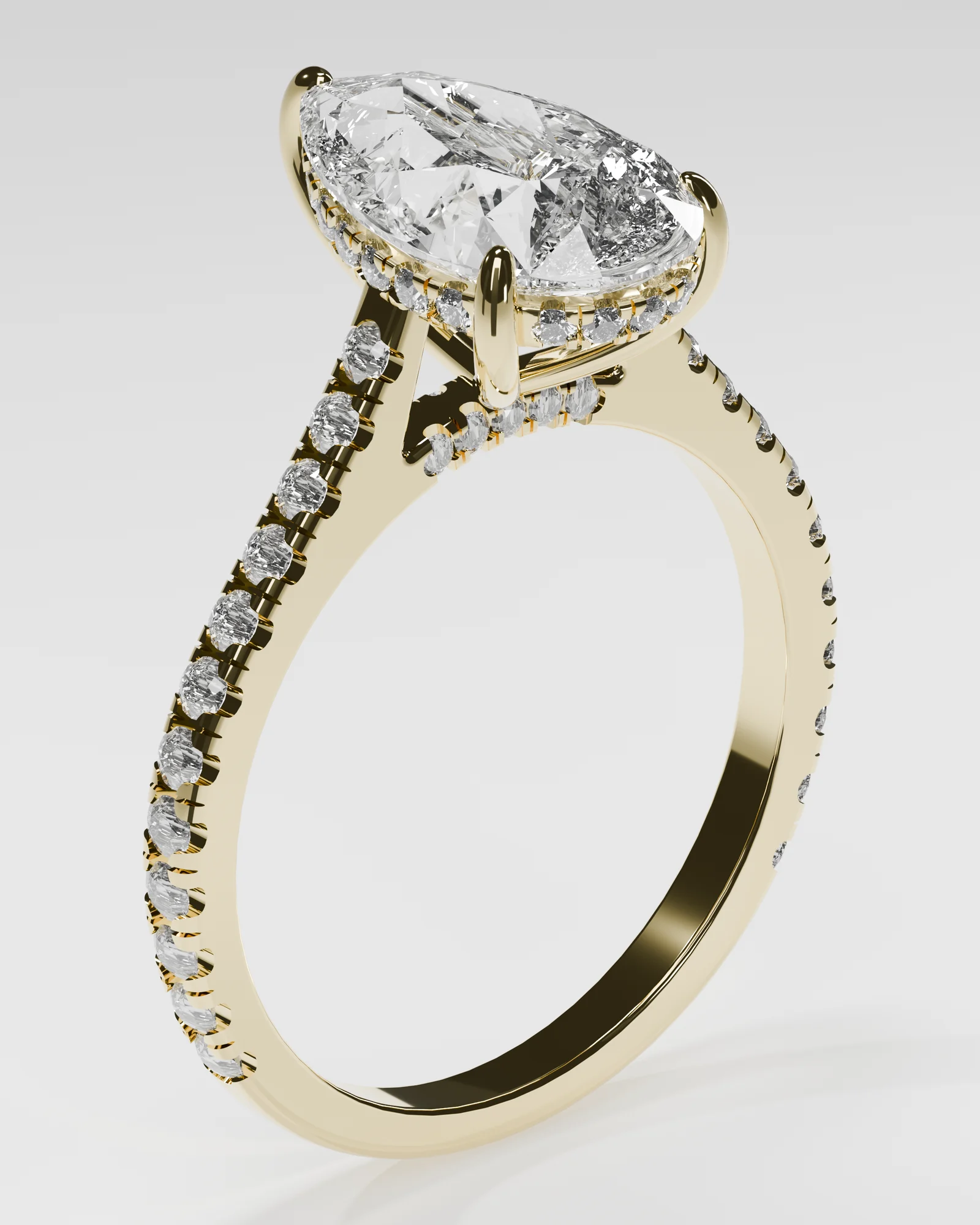
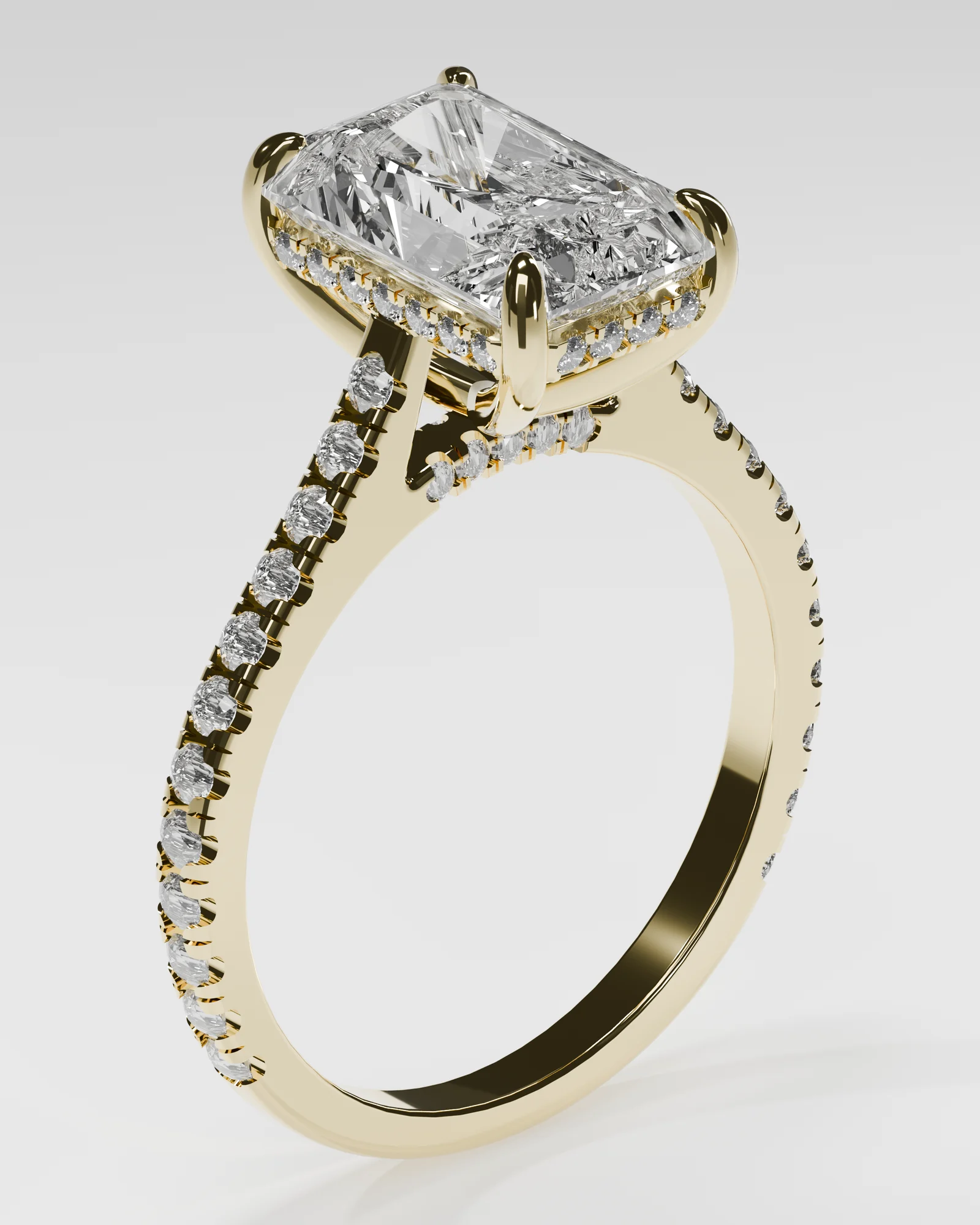
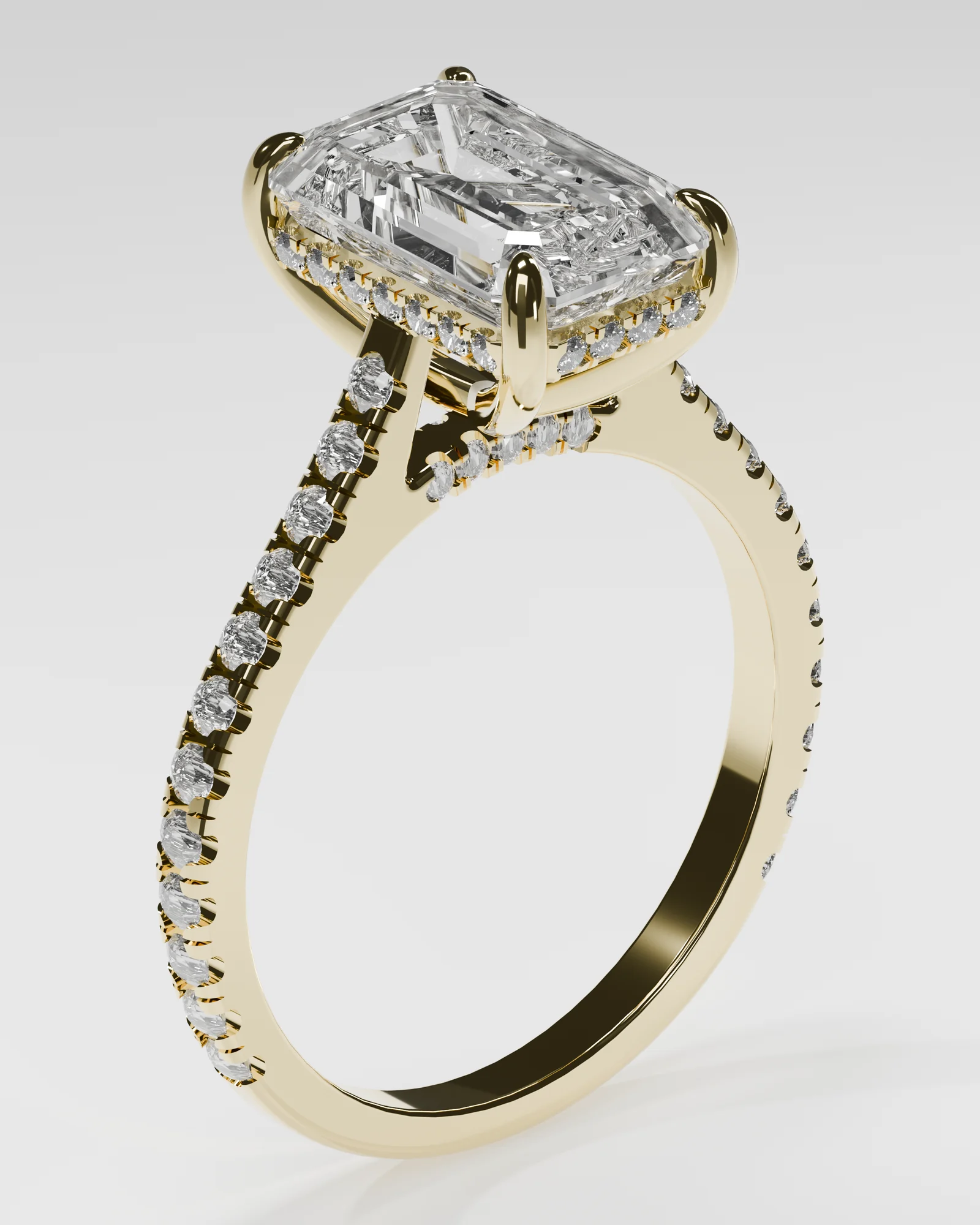
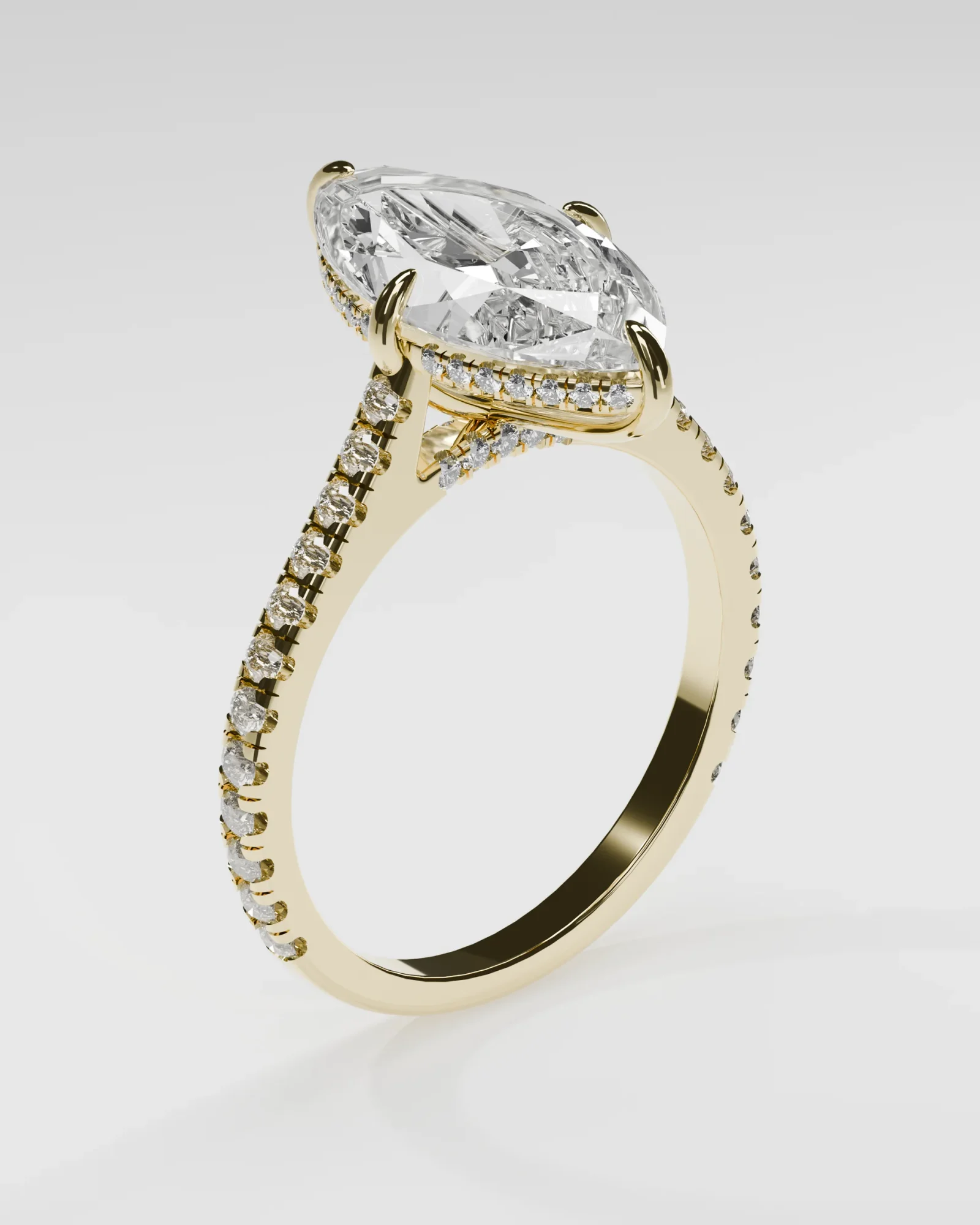
The Rosamonde
The Rosamonde, a cathedral setting

A shape that follows its load

Why the arch is pointed

An arch stands when the line its weight pushes along stays inside the masonry. In 1676 Robert Hooke set the rule down as a riddle: as hangs the flexible line, so, inverted, will stand the rigid arch. Hang a chain and it finds that line by itself. Gaudí designed with weighted strings for the same reason.

Hang a weight from the middle of the chain and it pulls into a point. Turn that shape over and you have a pointed arch, the form that best carries a load concentrated at its top. A round arch carrying the same load pushes harder outward at its feet. In a cathedral setting, that concentrated load is the diamond.

Hang itTurn it overSet a stone on top
The same geometry at three scales: a weighted chain, a stone arch, a ring.

Where it came from

Cairo, then Saint-Denis

  1. 861

    The Nilometer on Rhoda Island in Cairo, built to measure the Nile’s flood, has pointed arches over the openings in its walls. It is one of the earliest dated examples still standing.

  2. 11th c.

    Pointed arches appear in southern Italy, where Amalfi’s merchants traded with Cairo, and in 1088 in the great abbey church of Cluny, in Burgundy.

  3. 1140s

    Abbot Suger rebuilds the choir of Saint-Denis, near Paris, with pointed arches and ribbed vaults. It is usually counted as the first Gothic building.

  4. Today

    The same two curves, a few millimetres tall, rise from the shoulders of an engagement ring.

Reading the drawing

A cathedral setting, part by part

L12345
  1. 1

    Crown

    The diamond sits at the top of the structure, where the two arches would meet.

  2. 2

    Arch

    Two shoulders curve up from the band and lean in to brace the head.

  3. 3

    Springer

    The point where each arch leaves the band and its load turns into the shank.

  4. 4

    Pier

    The band, which carries the load around the finger.

  5. 5

    Bay

    The opening beneath the stone. It keeps the underside of the diamond open to light and easy to clean.

LL

Short claws, braced high

The arches meet the claws just below the girdle, so only a short length of each claw stands free. The load from the stone travels down the arches and around the band.

Load path Free length

The arithmetic of a claw

Halve the length, eight times the stiffness

A claw is a small cantilever, fixed at one end and loaded at the other. How far it bends under a knock grows with the cube of its free length, so a claw half as long bends one eighth as much. The bending at its root is halved too.

stiffness ∝ 1L³

That is the quiet work the arches do. Switch between the two drawings to see it. By meeting the claws just below the girdle, they leave only the tips free, which is the part that needs to move when the stone is set.

10

Hard is not the same as tough

Diamond tops the Mohs scale, yet it can split cleanly along four planes when it is struck hard at the wrong angle, most often at the thin edge of the girdle. Metal that rises around the stone takes knocks the diamond would otherwise take.

7

Why claws wear

Household dust contains quartz, at 7 on the same scale and harder than any gold alloy. Years of brushing against it round off claw tips a little at a time. Wear is easy to see on an open setting, and easy to rebuild early.

↔

What to weigh

The arches lift the stone, so a straight wedding band can sit close beneath it. Height also means more exposure. If your hands are busy, a lower head or a bezel may suit you better.

Good to know

Cathedral settings: your questions

What is a cathedral setting?

An engagement ring setting where the band rises in two arches on either side of the centre stone and meets the head just below the diamond. The arches brace the claws and lift the stone above the band.

Is a cathedral setting more secure than a plain head?

The arches brace each claw close to the stone, so less of the claw stands free. A claw behaves like a small cantilever: halve its free length and it becomes about eight times stiffer. Security still depends on the claws themselves, which is why they should be checked regularly.

Does a cathedral setting sit higher on the finger?

Yes, a little. The height lets a straight wedding band sit close beneath the head, but a higher stone is more exposed to knocks. If you work with your hands, ask us about a lower head or a bezel.

Will a straight wedding band sit flush against it?

Usually, because the arches lift the head clear of the band. We check the pairing with you at your consultation.

How do I look after a cathedral setting?

The open bay under the stone makes it easier to clean than a closed setting. Claw tips wear slowly against everyday grit, so bring the ring back every six to twelve months. If you bought it from us, cleaning and claw checks are complimentary for life for the original owner.