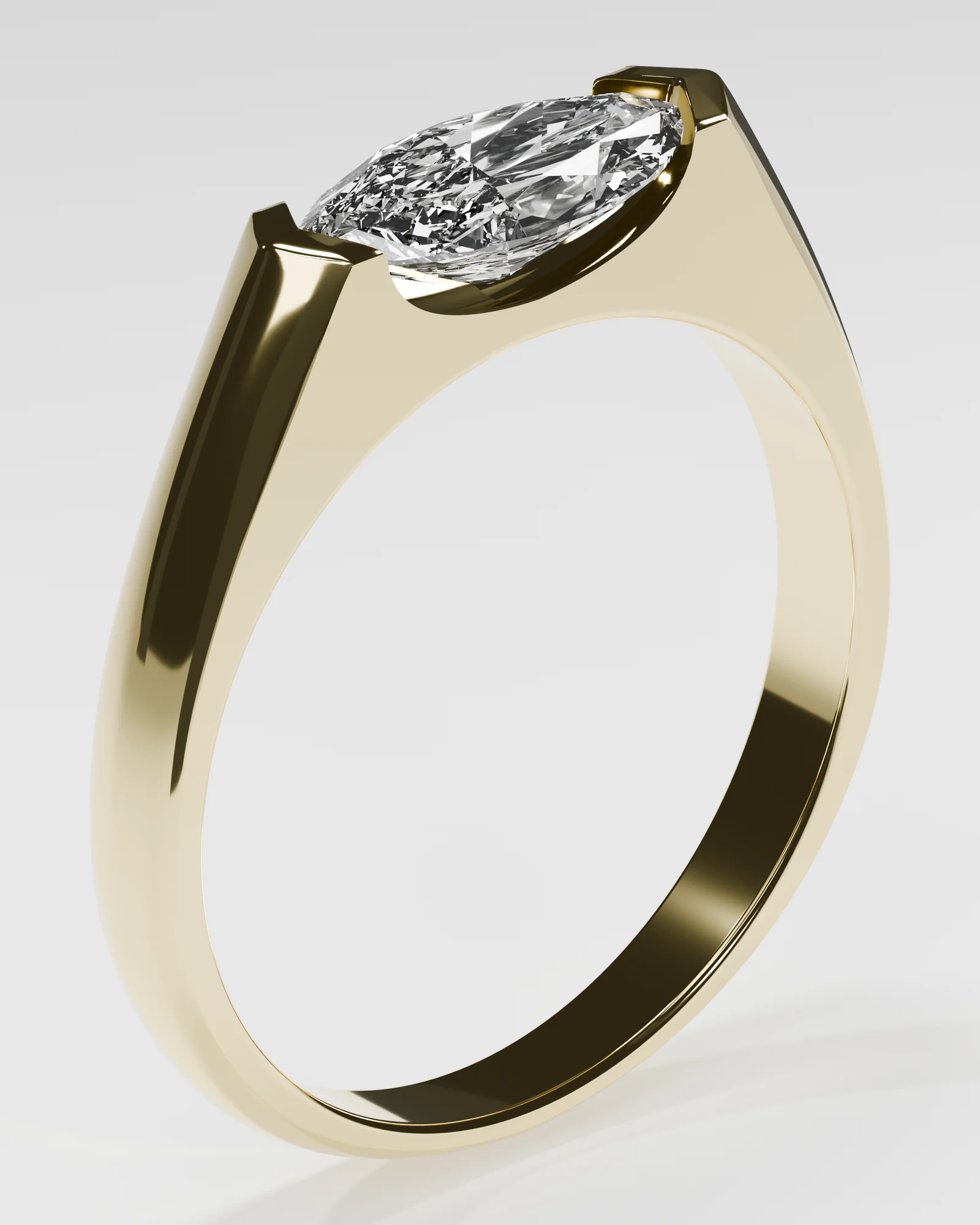
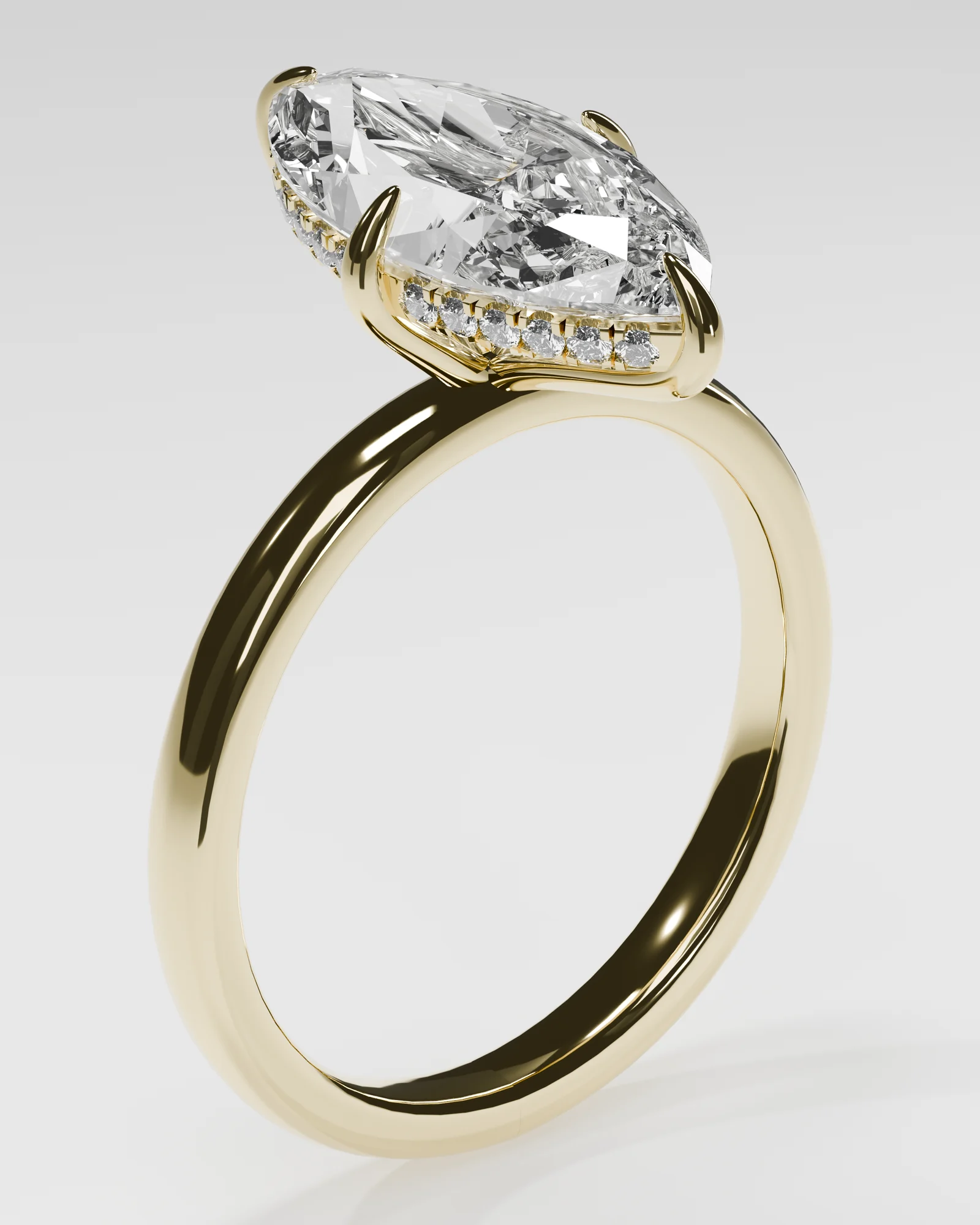
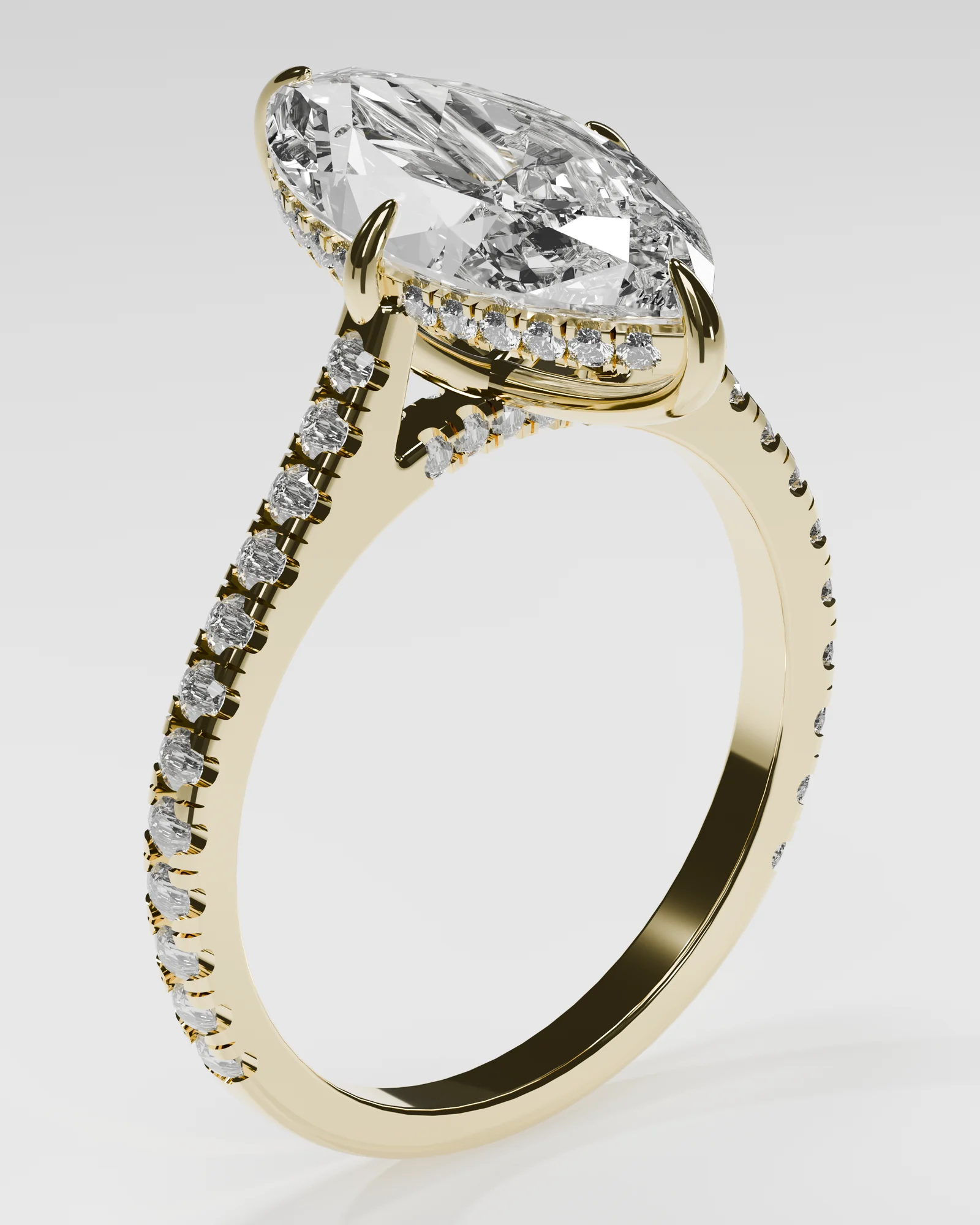
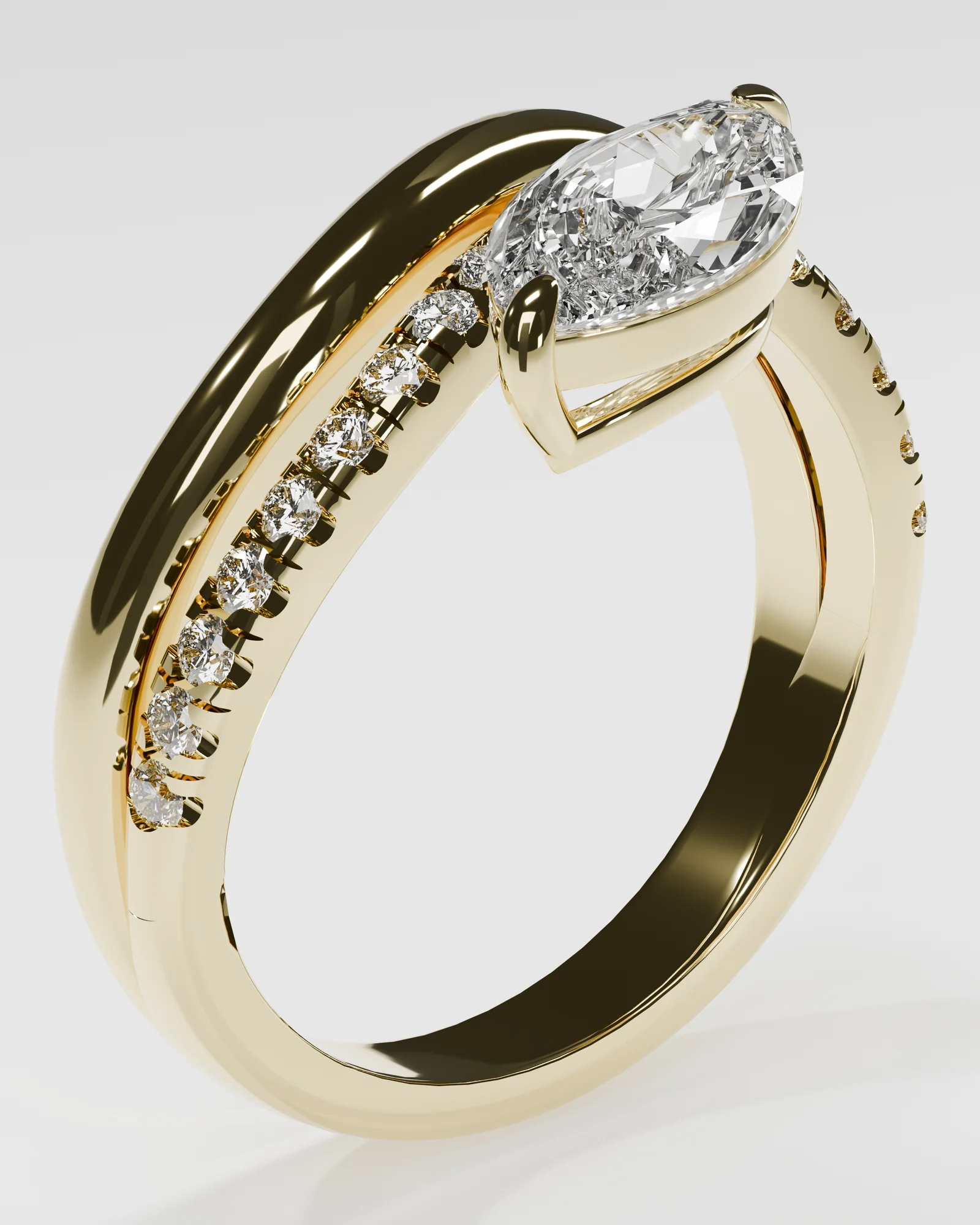
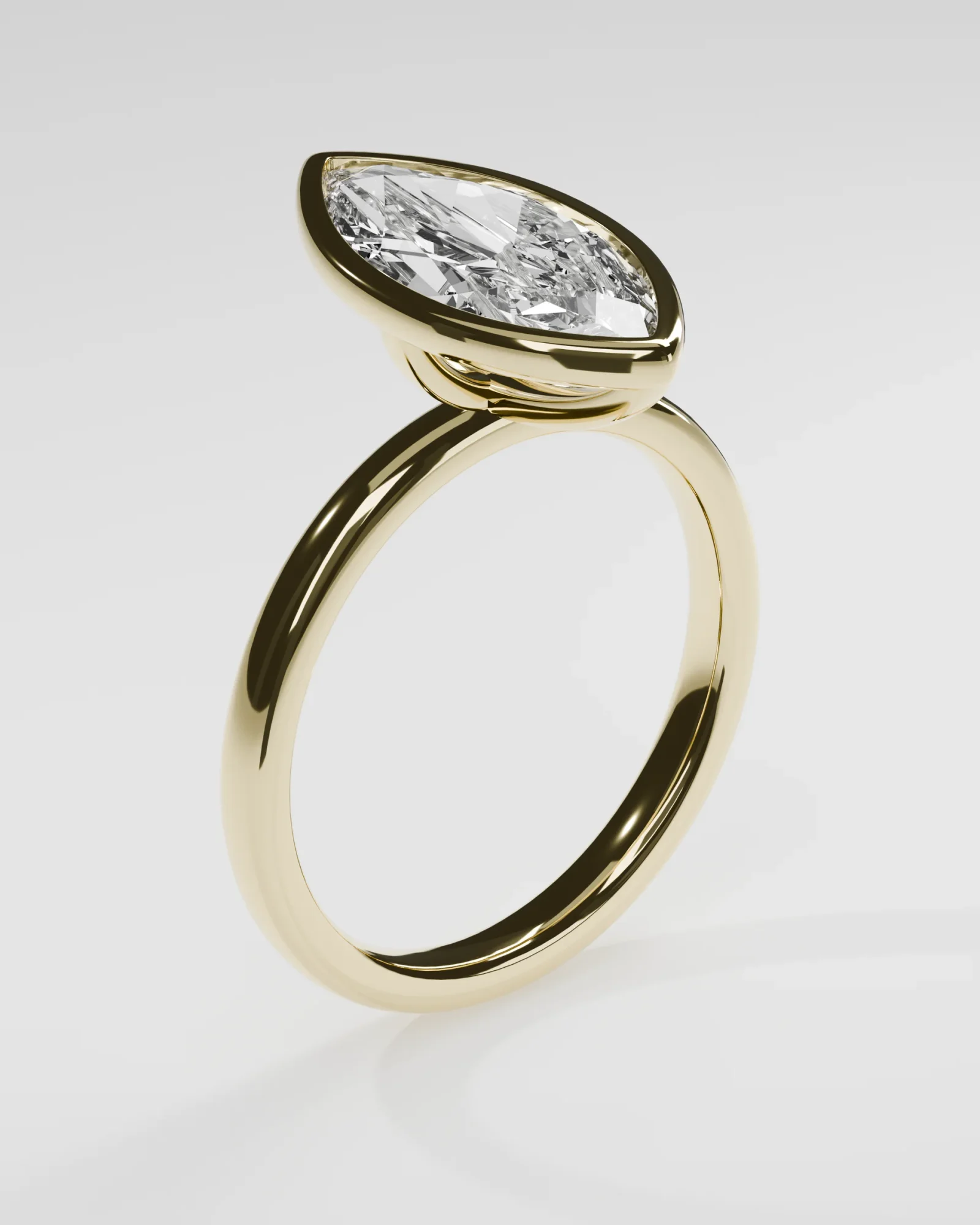
Marquise Engagement Rings

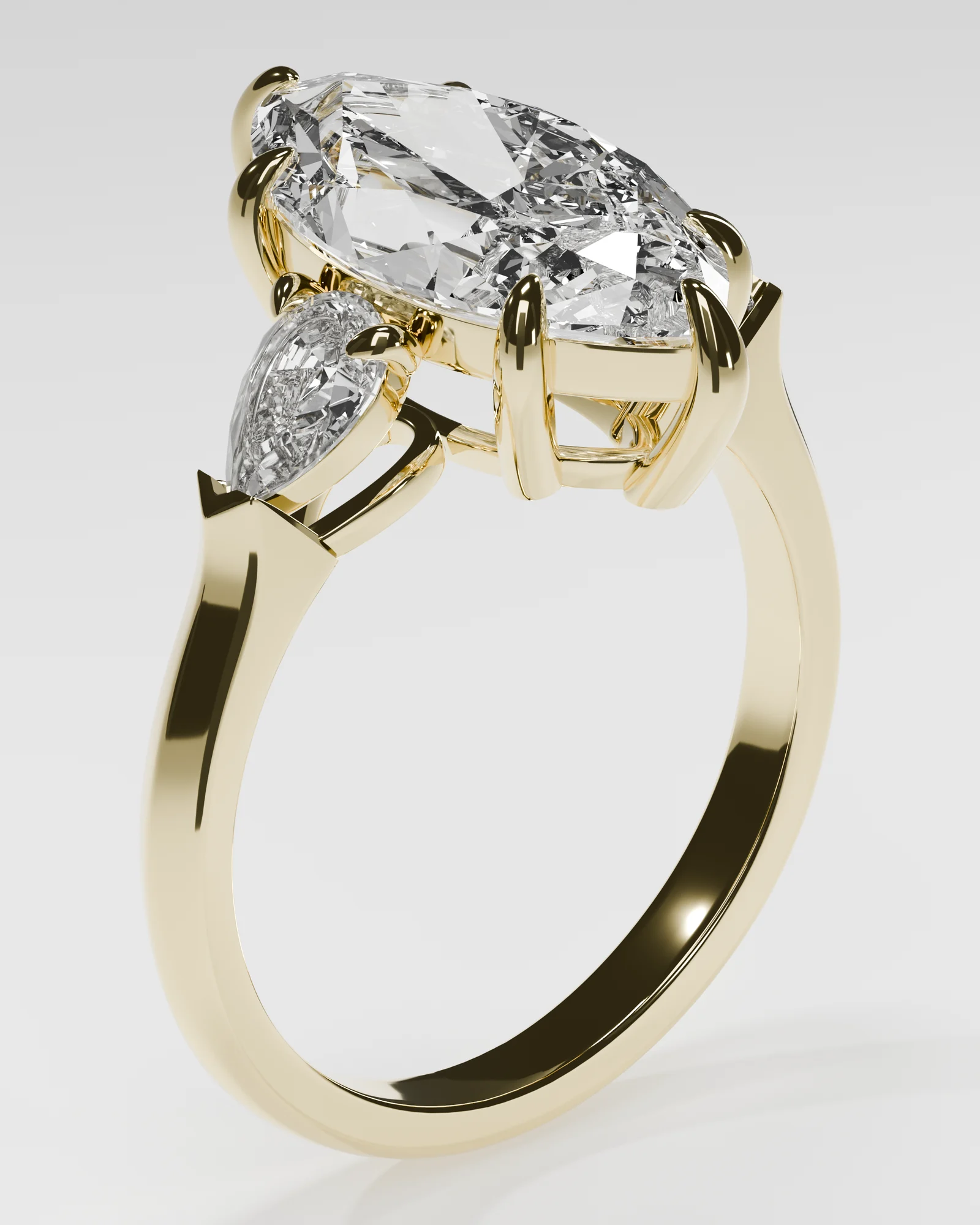
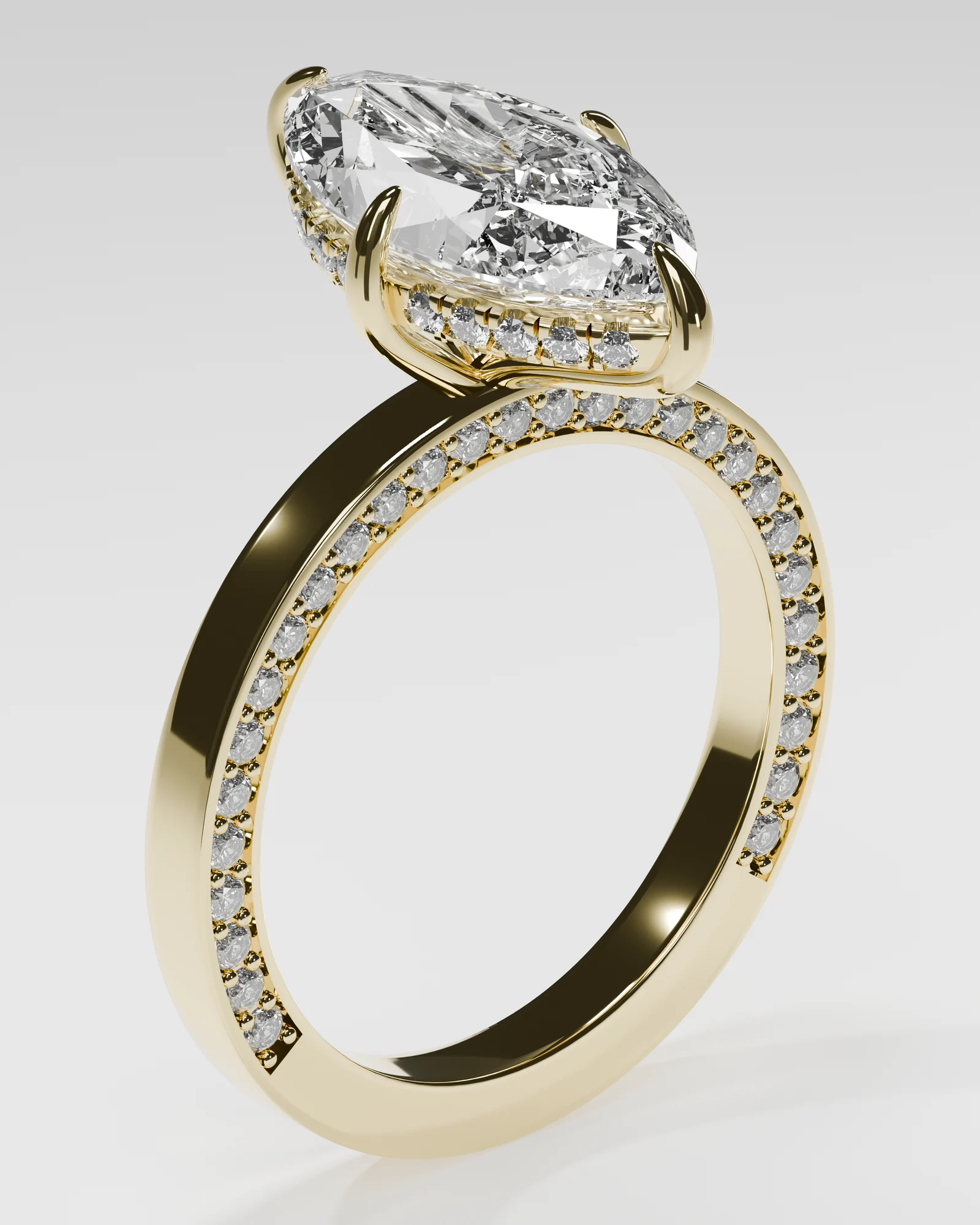
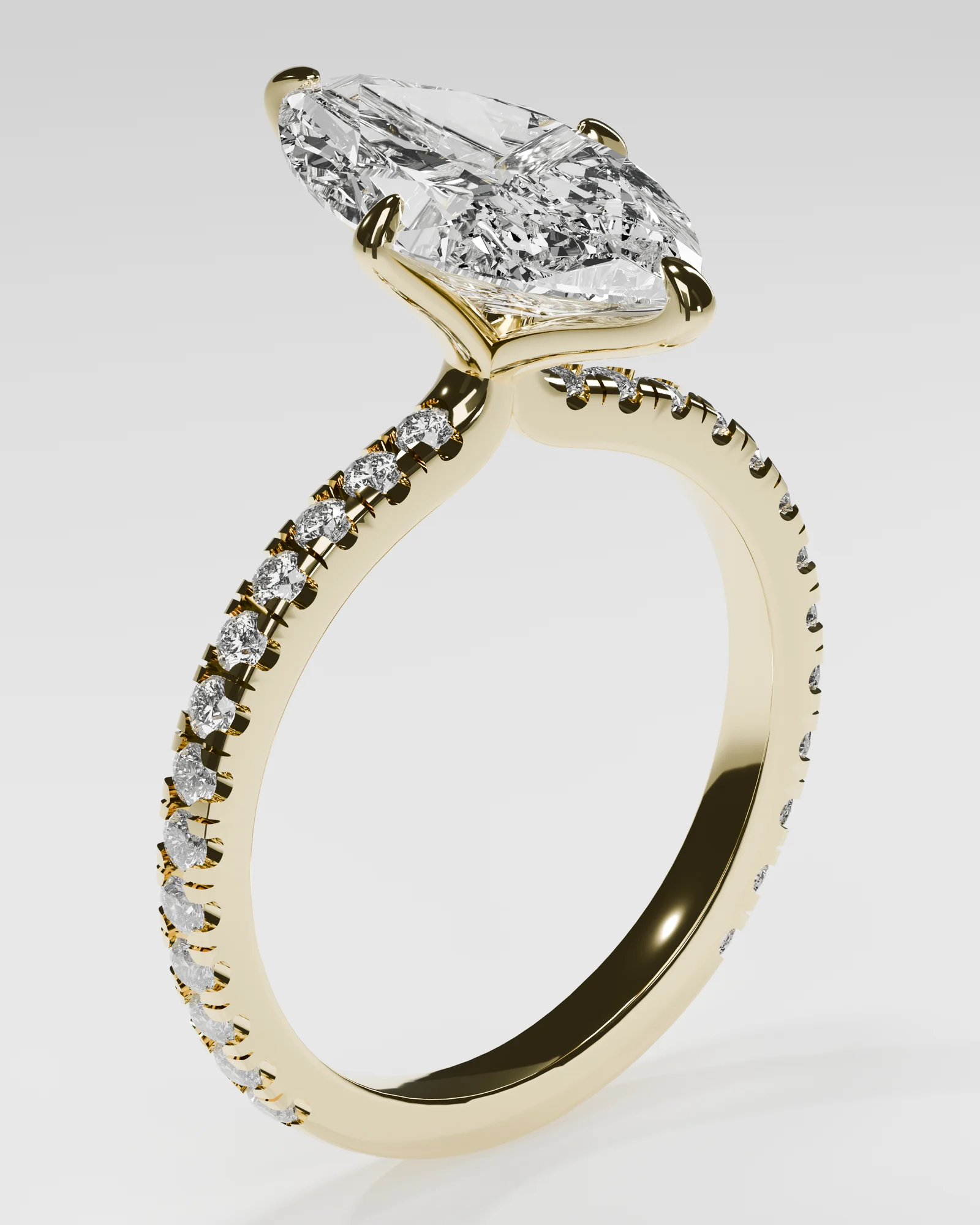
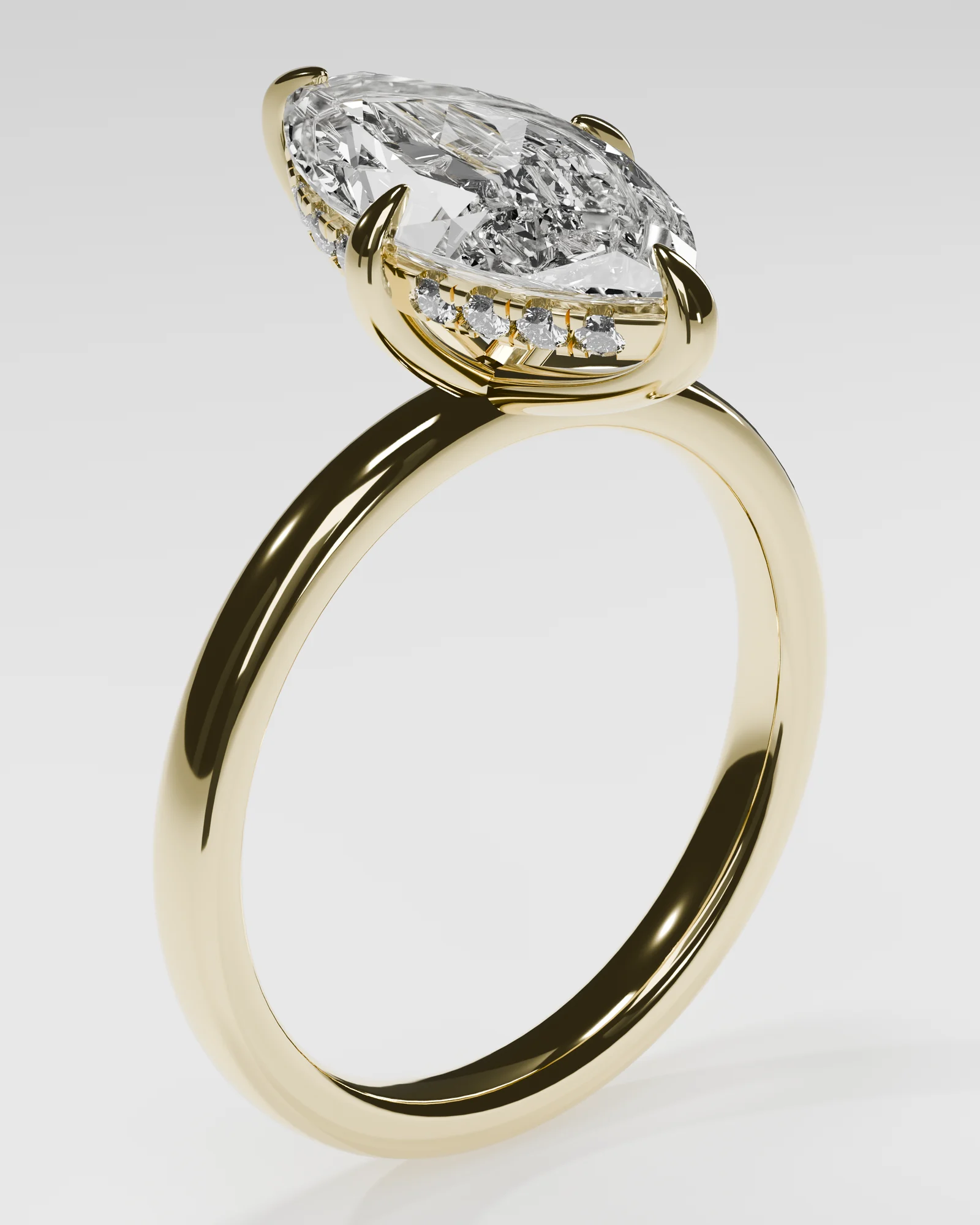
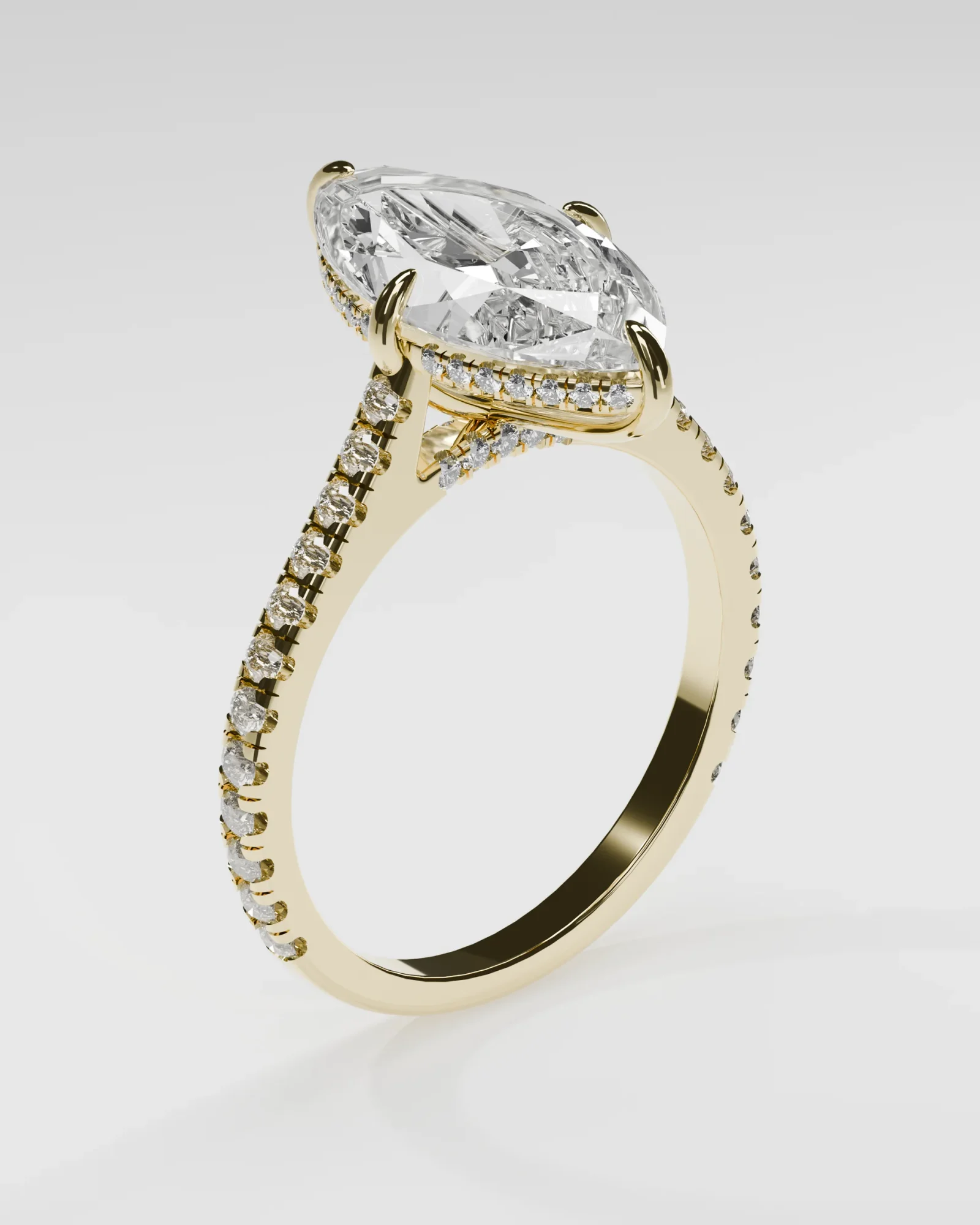
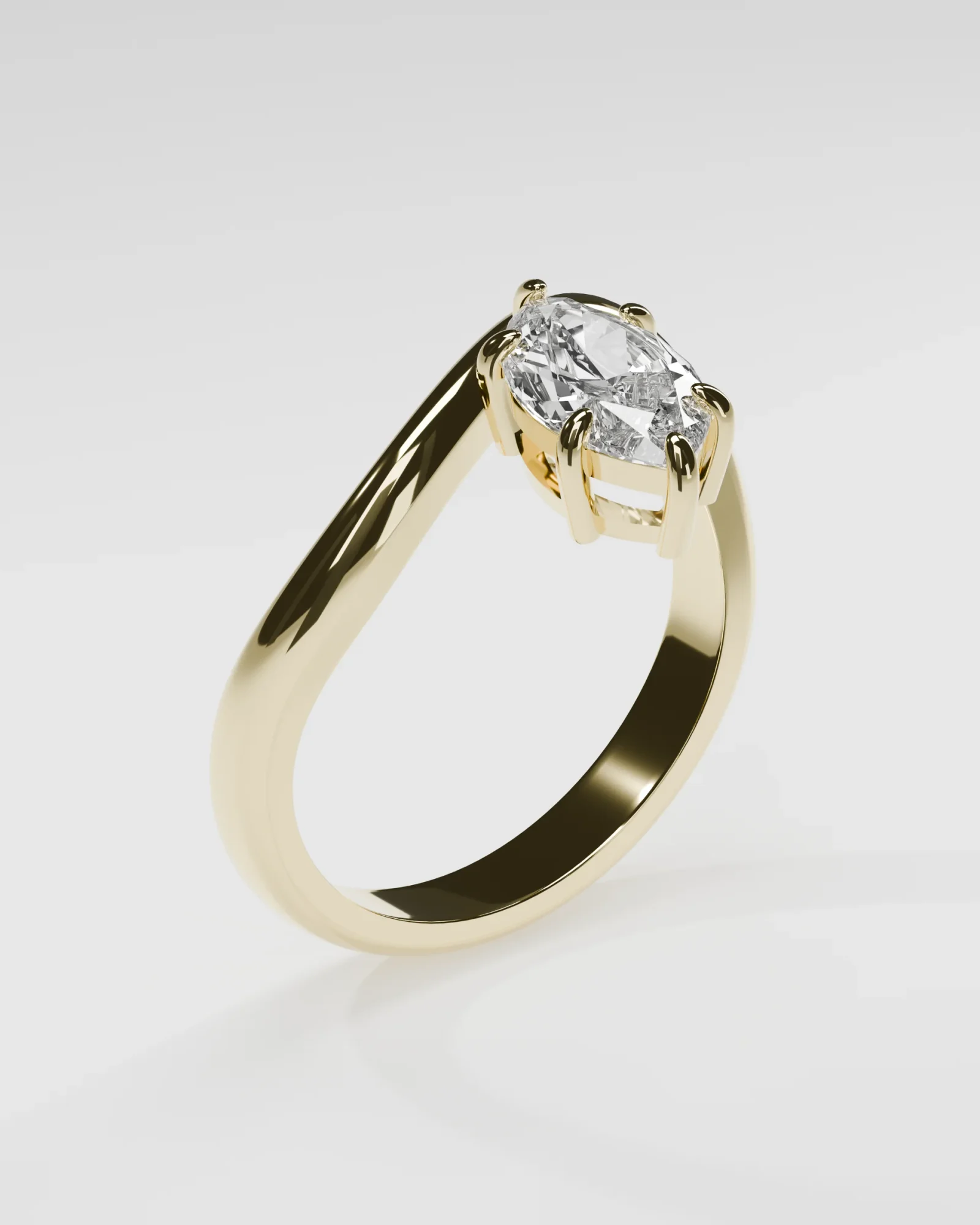
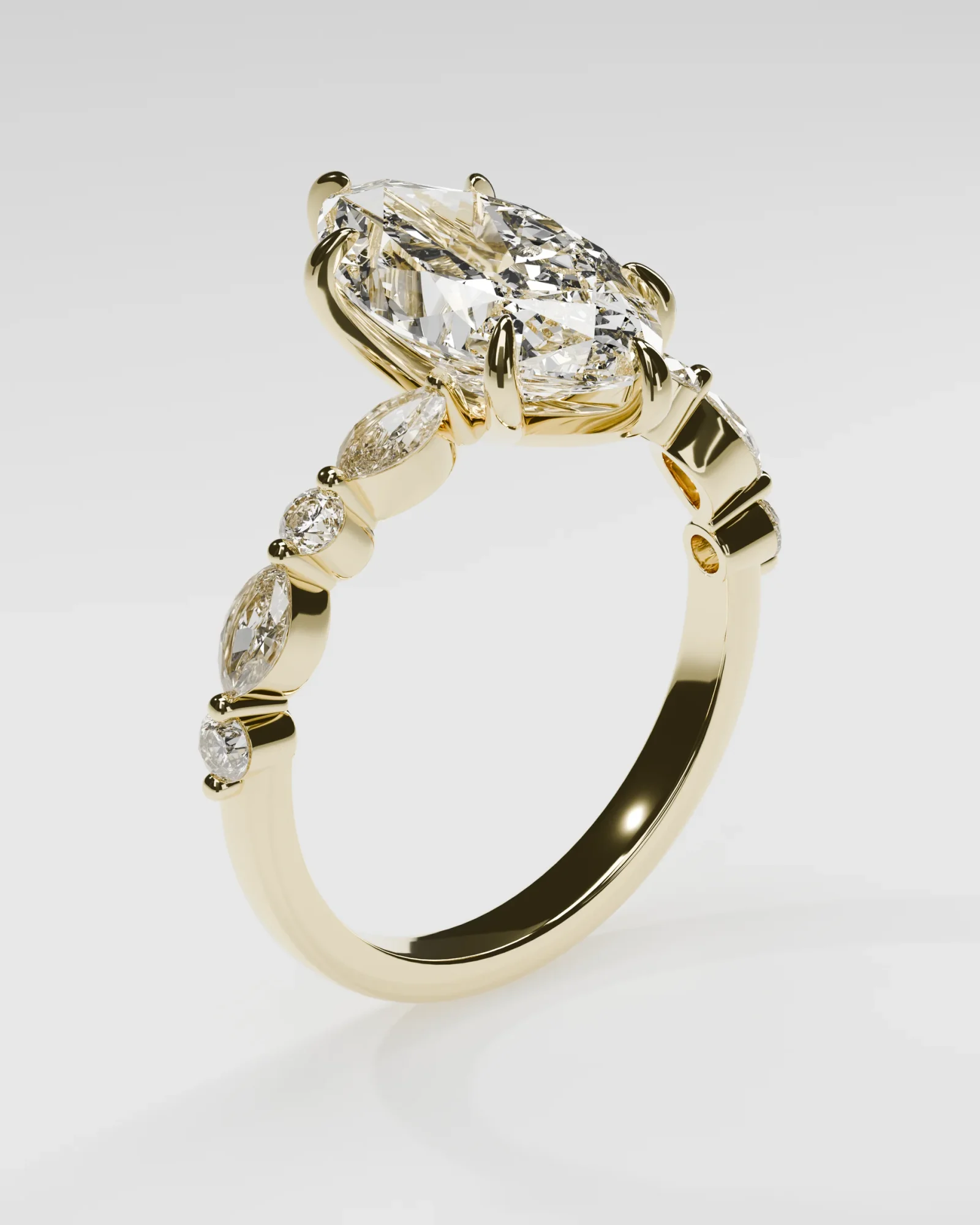
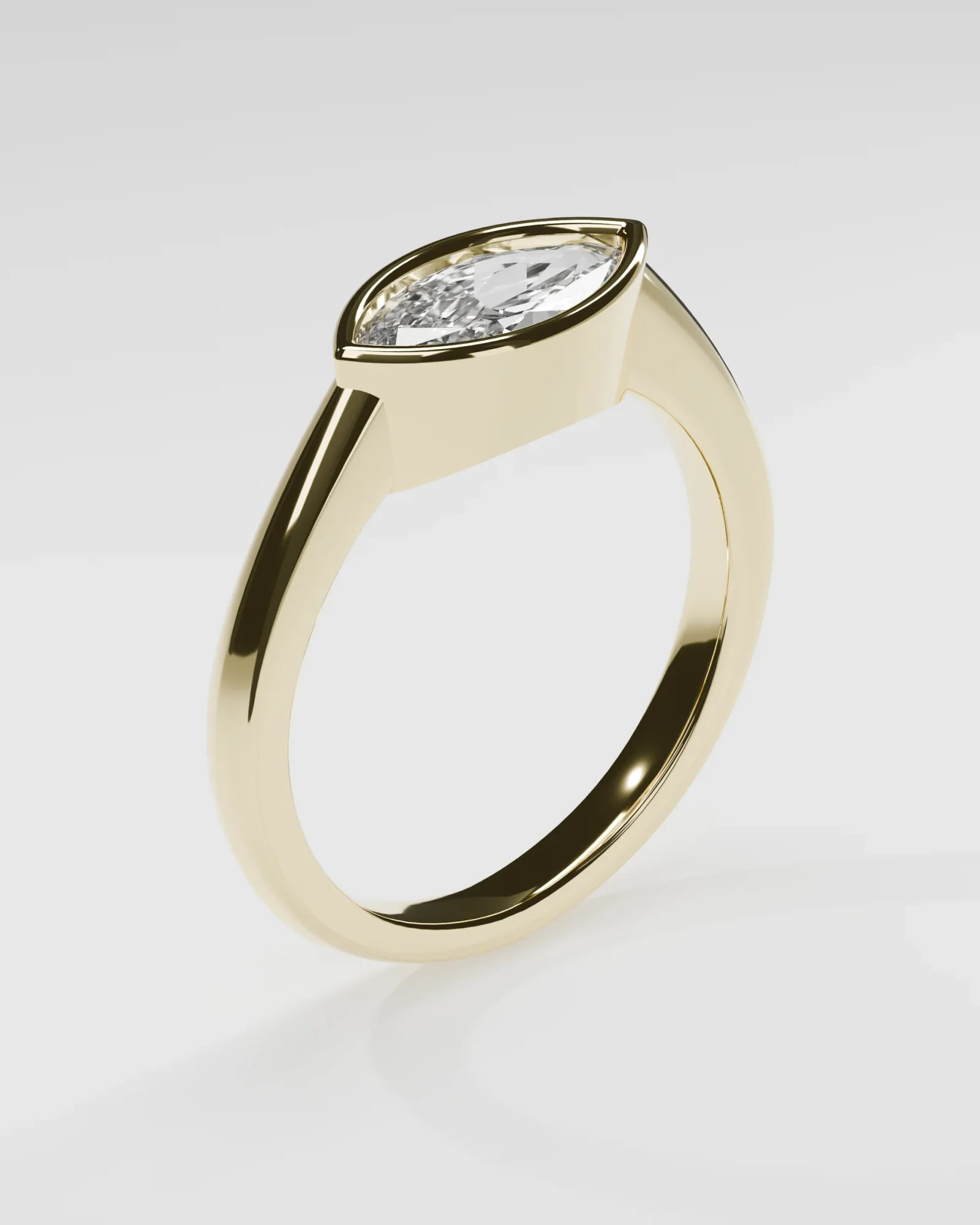
A marquise is a long diamond with two pointed ends, and it gives the most length and the largest look of any shape for its weight. We design marquise rings in 18 carat gold with claws that protect both points, around a natural or laboratory-grown stone.

Why people choose a marquise

The marquise has a long history and a strong outline. Set north to south it lengthens the finger; set at an angle or east to west it looks thoroughly modern.

Because so much of the stone is spread across its length, a marquise looks larger than most shapes of the same carat weight.

Protecting the points

The two tips are the most delicate part of the diamond. We hold each one with a V-shaped claw, which covers the point and keeps it safe through everyday wear.

Choosing the stone

A length-to-width ratio of about 1.8 to 2.1 gives the traditional shape. Symmetry matters more than with most cuts: the two halves should mirror each other when you look down the length of the stone. Like ovals and pears, a marquise can show a bow tie, so it is worth seeing in person.

Good to know

Marquise Engagement Rings: your questions

Are marquise diamonds fragile?

The points are the vulnerable part, which is why we set each one under a V-shaped claw. Set well, a marquise is suited to everyday wear.

Is a marquise a vintage look?

It can be. Marquise rings were popular in the eighteenth century and again in the 1970s, but in a clean modern setting or set east to west the shape looks contemporary.

Does a marquise look bigger than other shapes?

Yes. For the same carat weight a marquise has one of the largest face-up areas of any diamond shape.

What wedding band goes with a marquise ring?

A curved or contoured band sits neatly against the points. We can show you bands that sit neatly with it, or design one to match.

Can a marquise be lab-grown?

Yes. Every design can be made with a natural or laboratory-grown marquise diamond, set in 18 carat gold.