Pear Engagement Rings

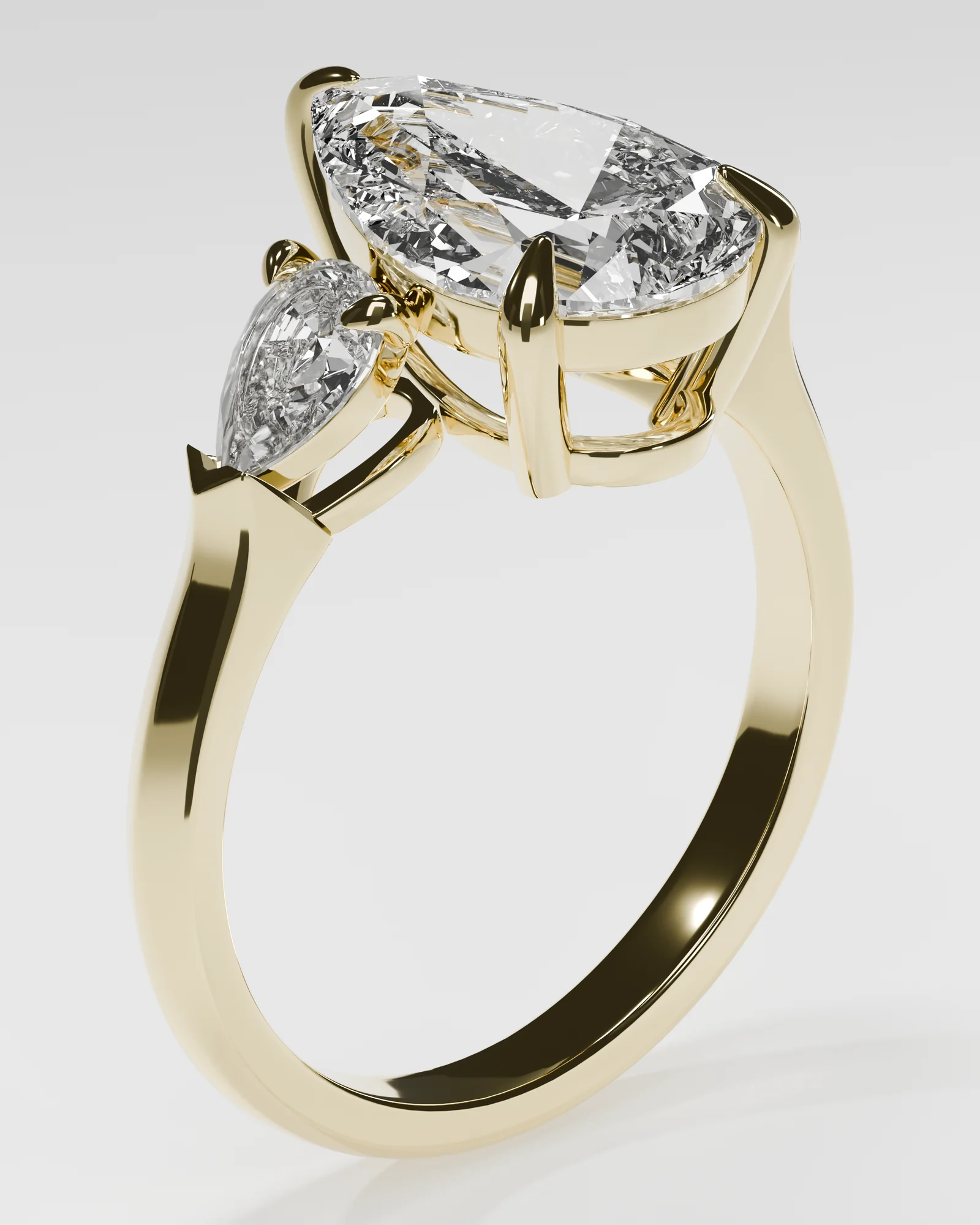
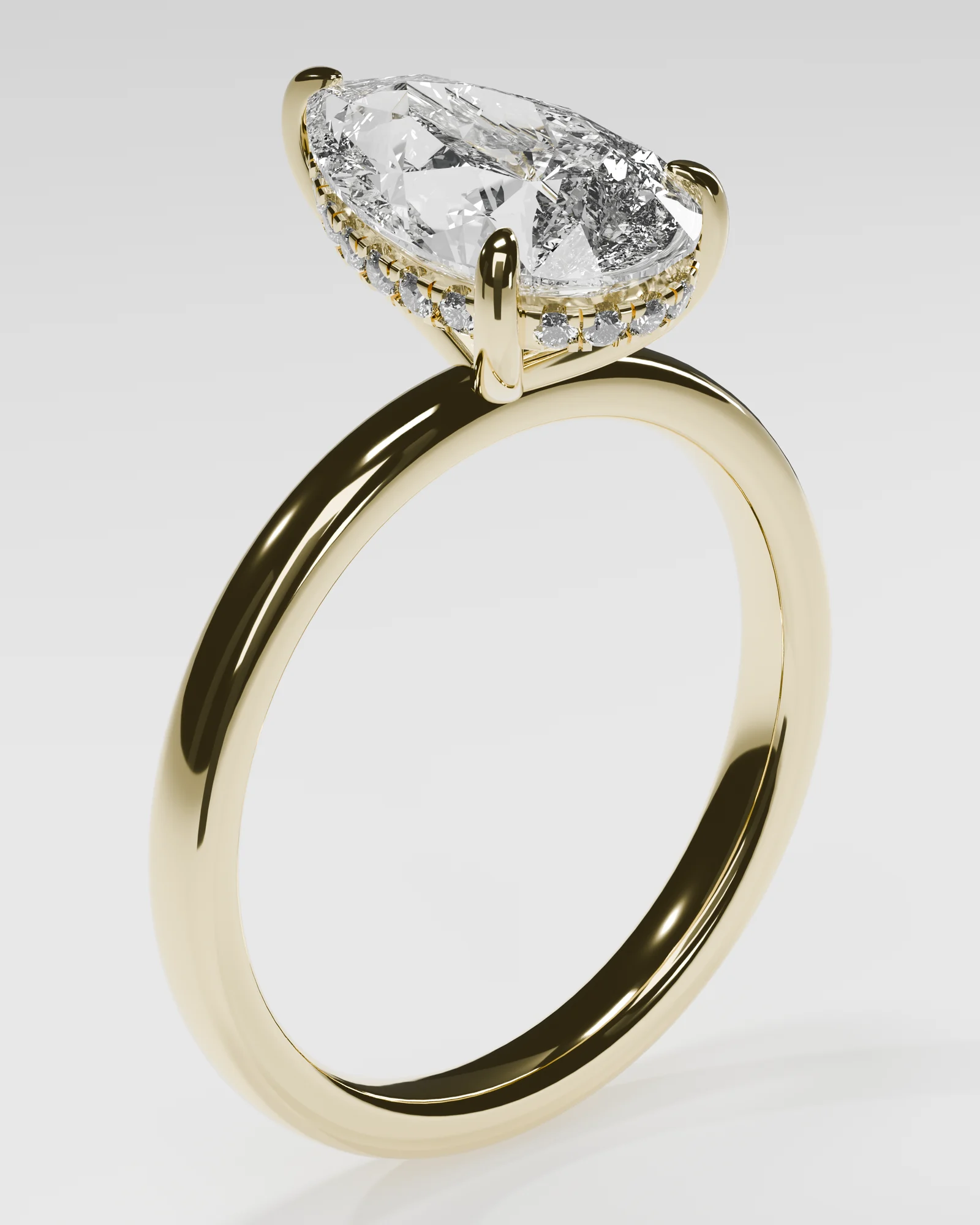
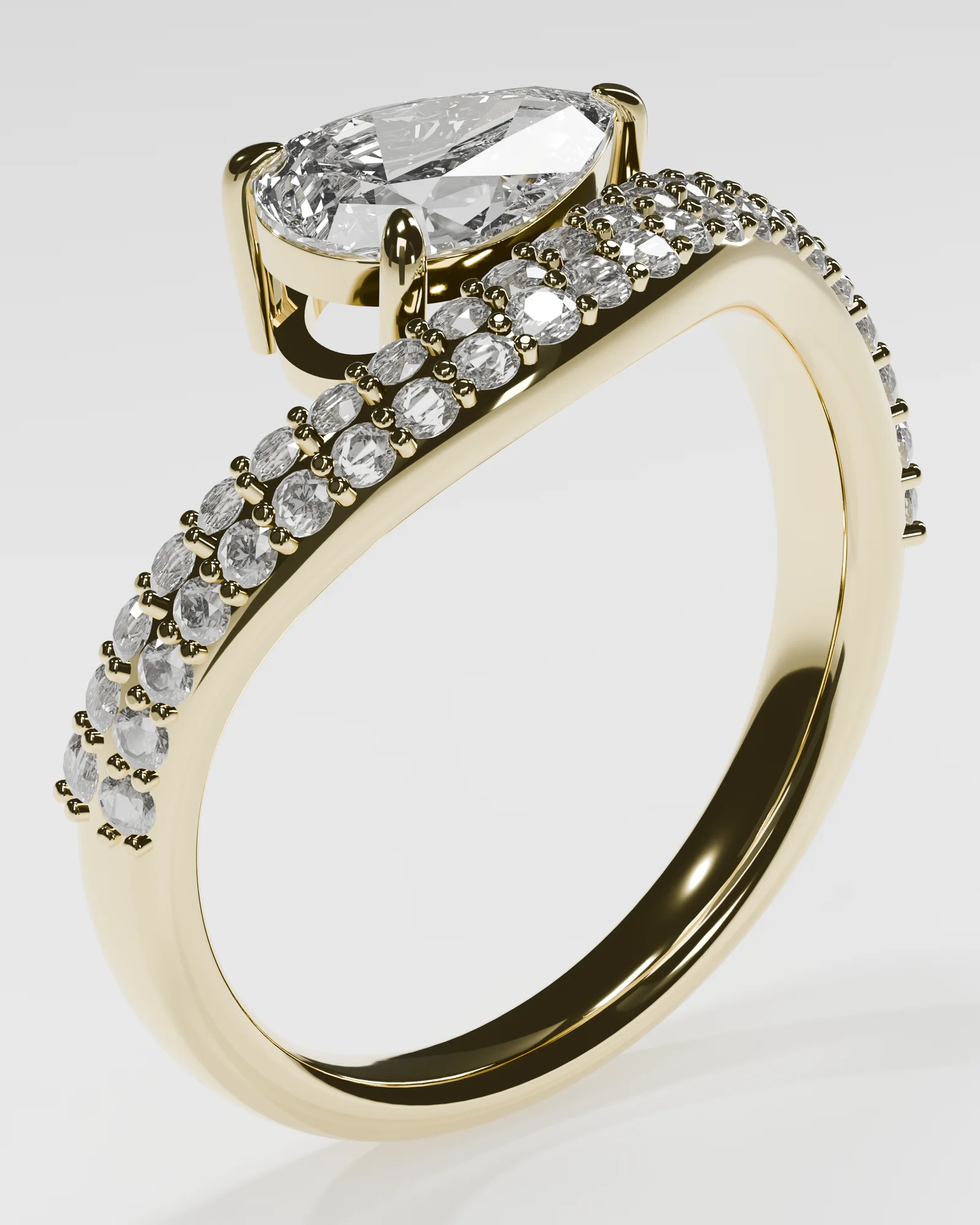
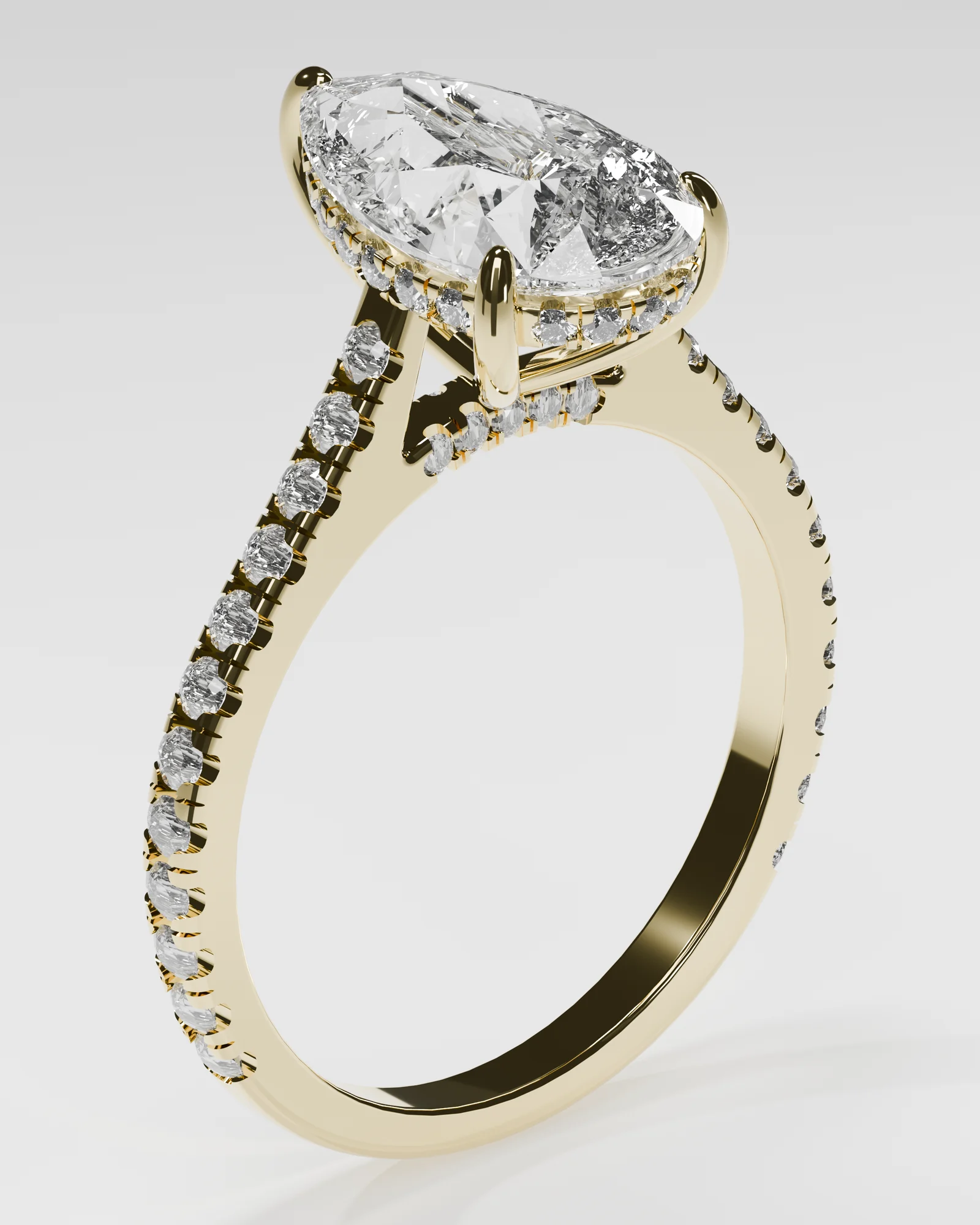
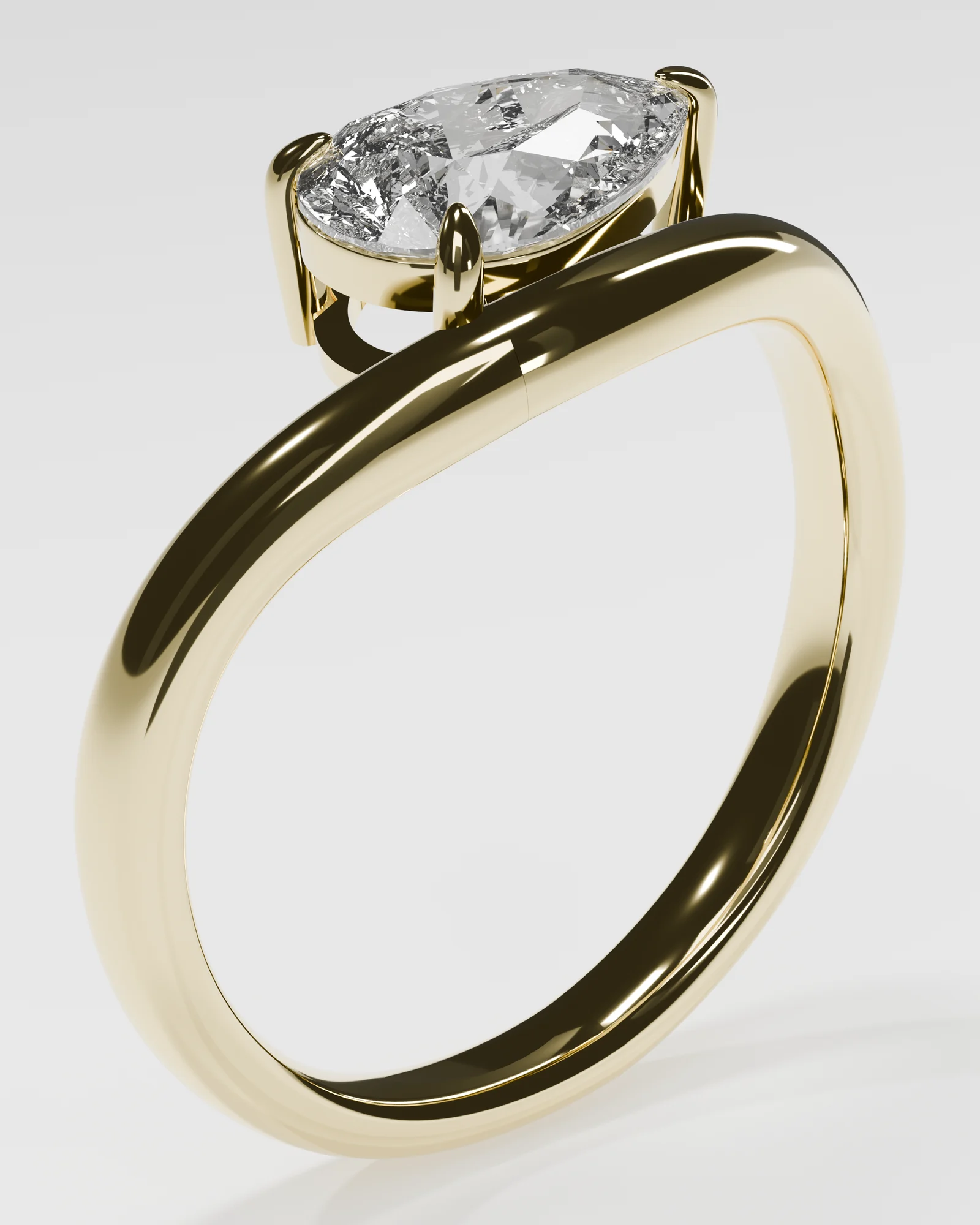
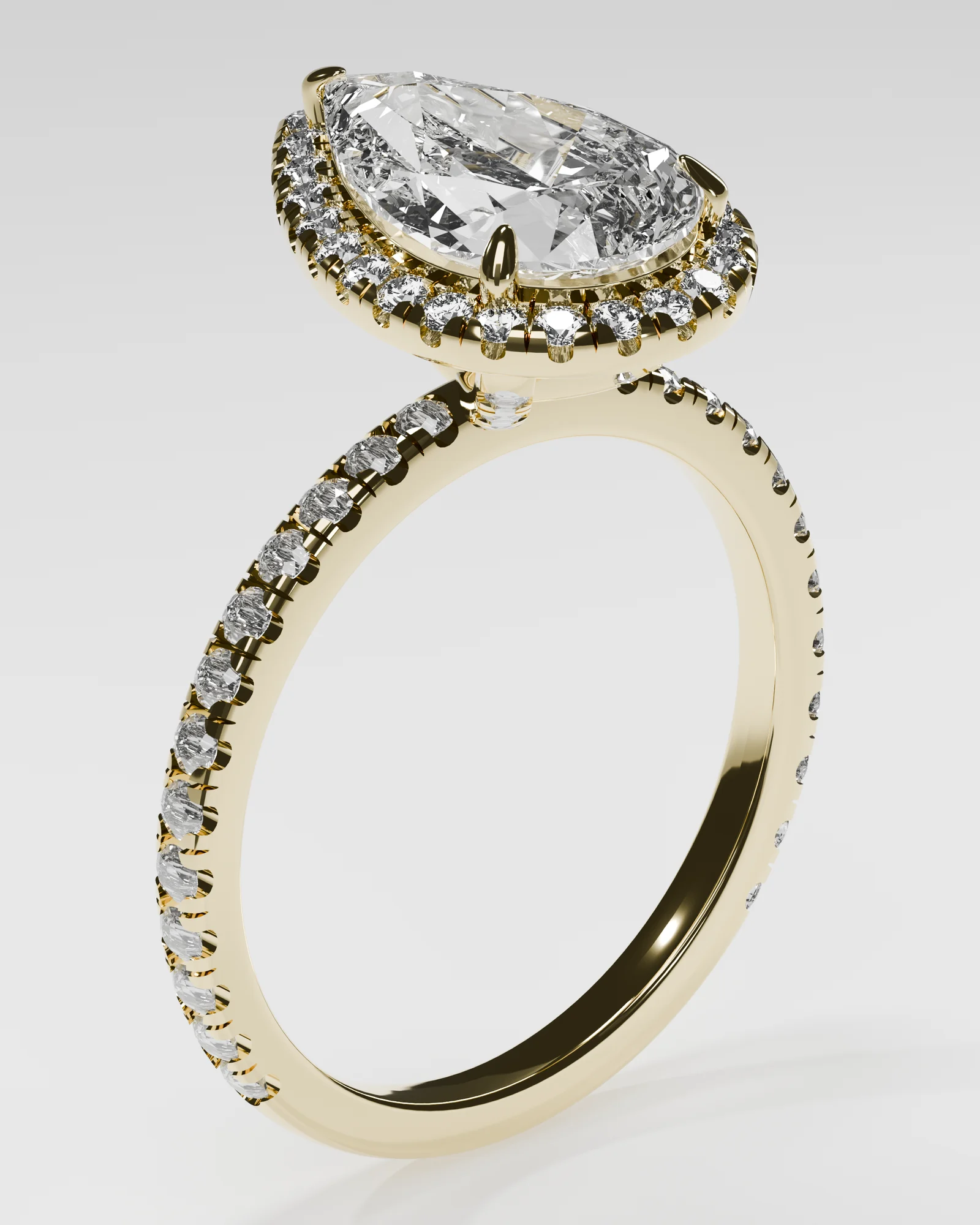
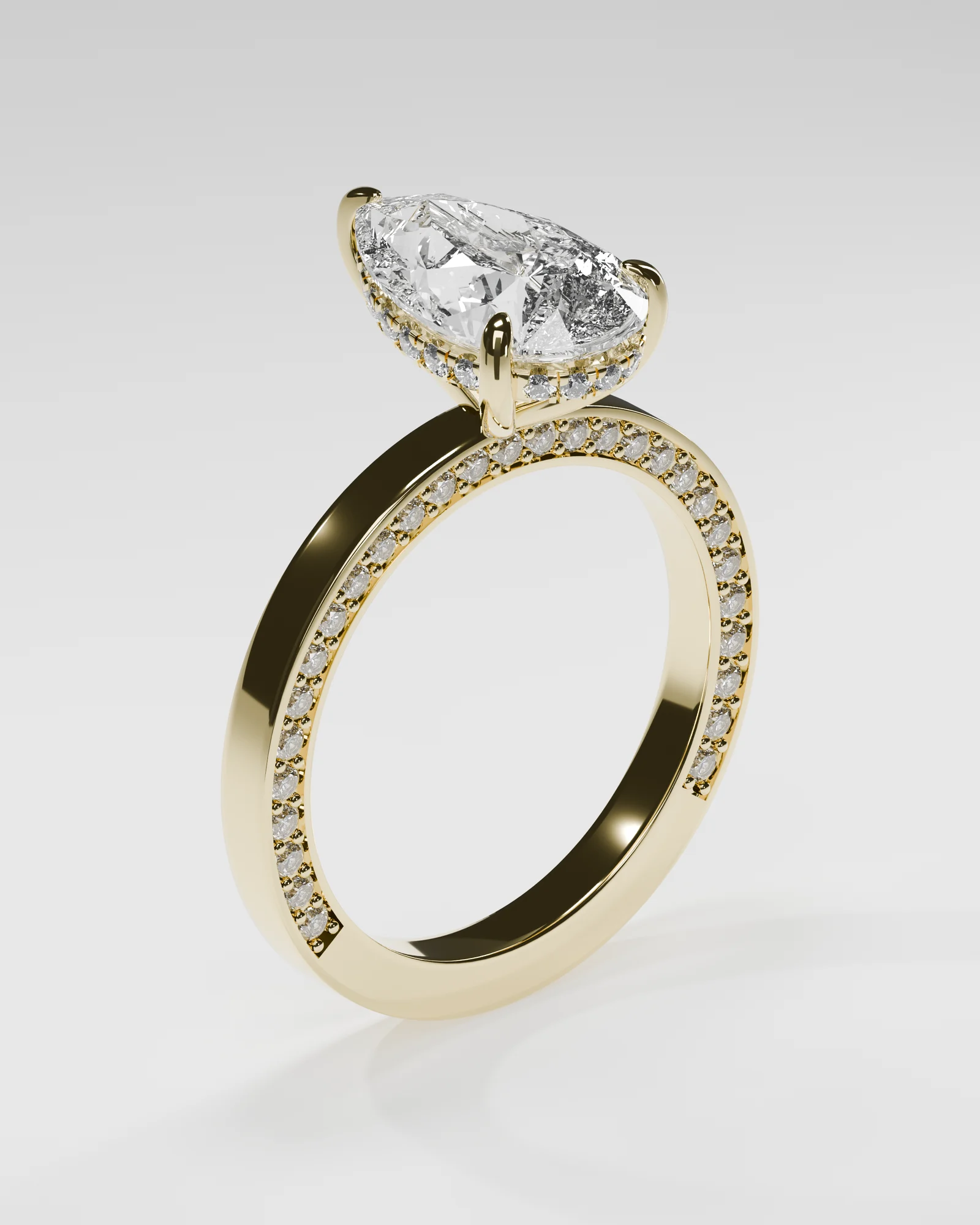
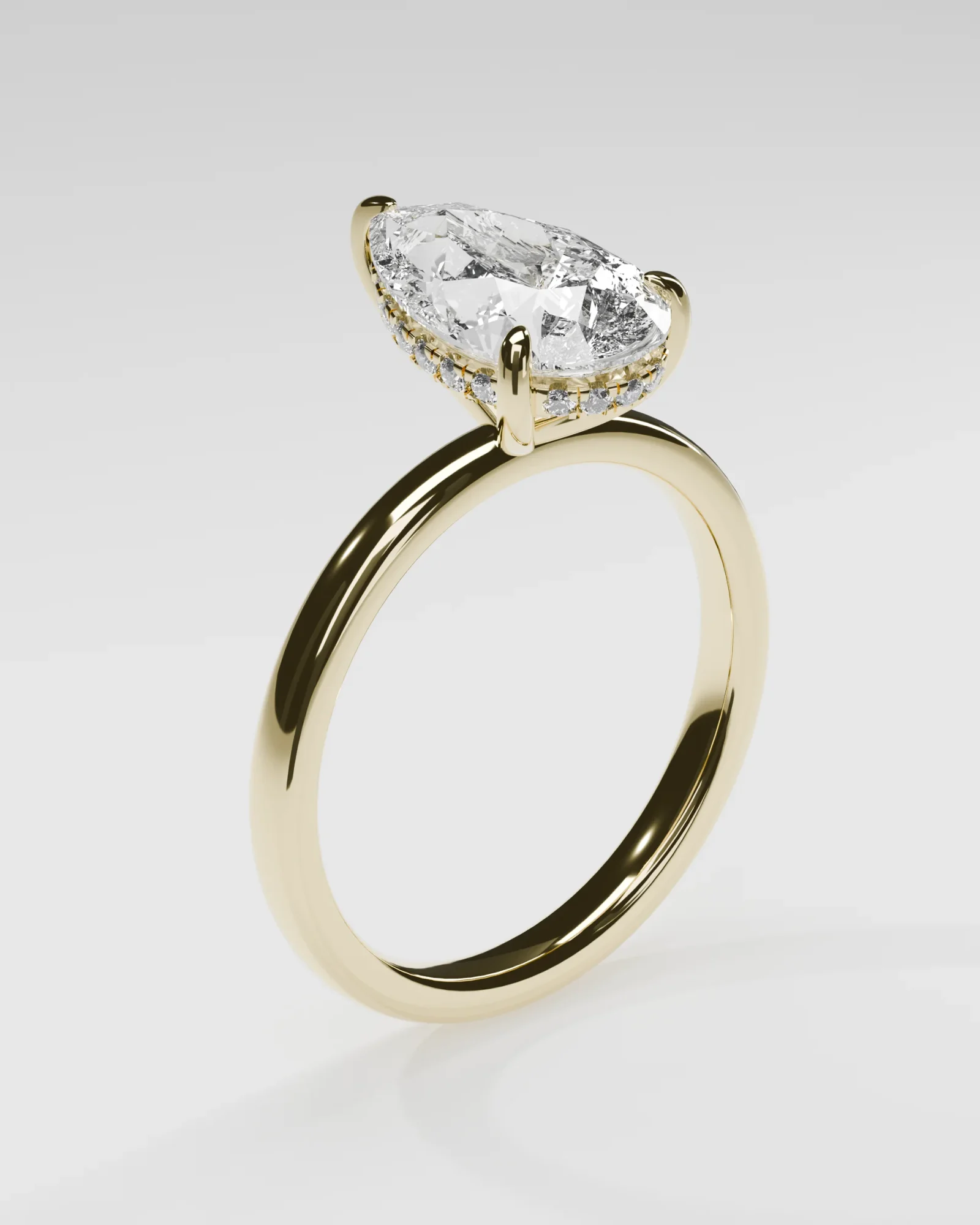
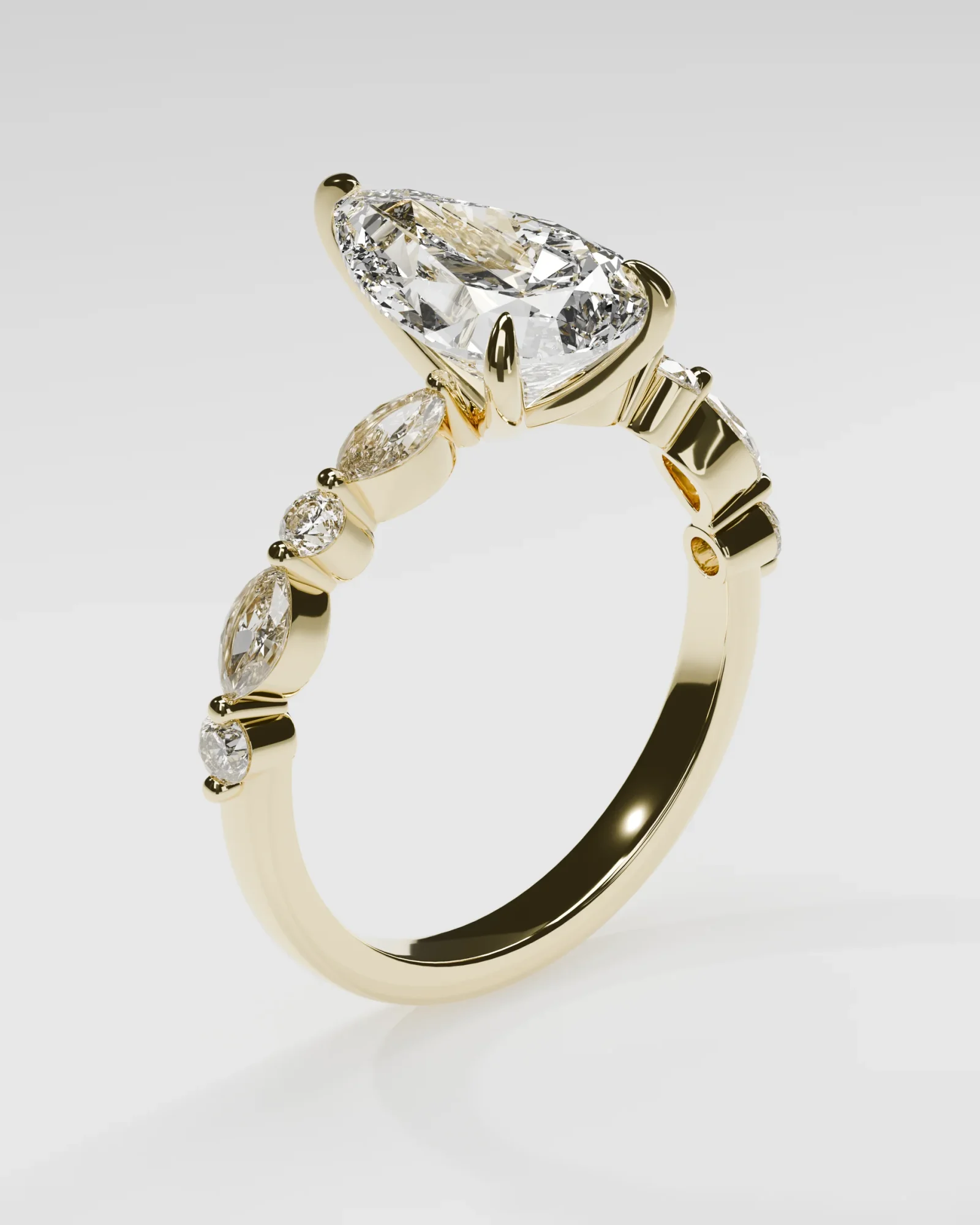
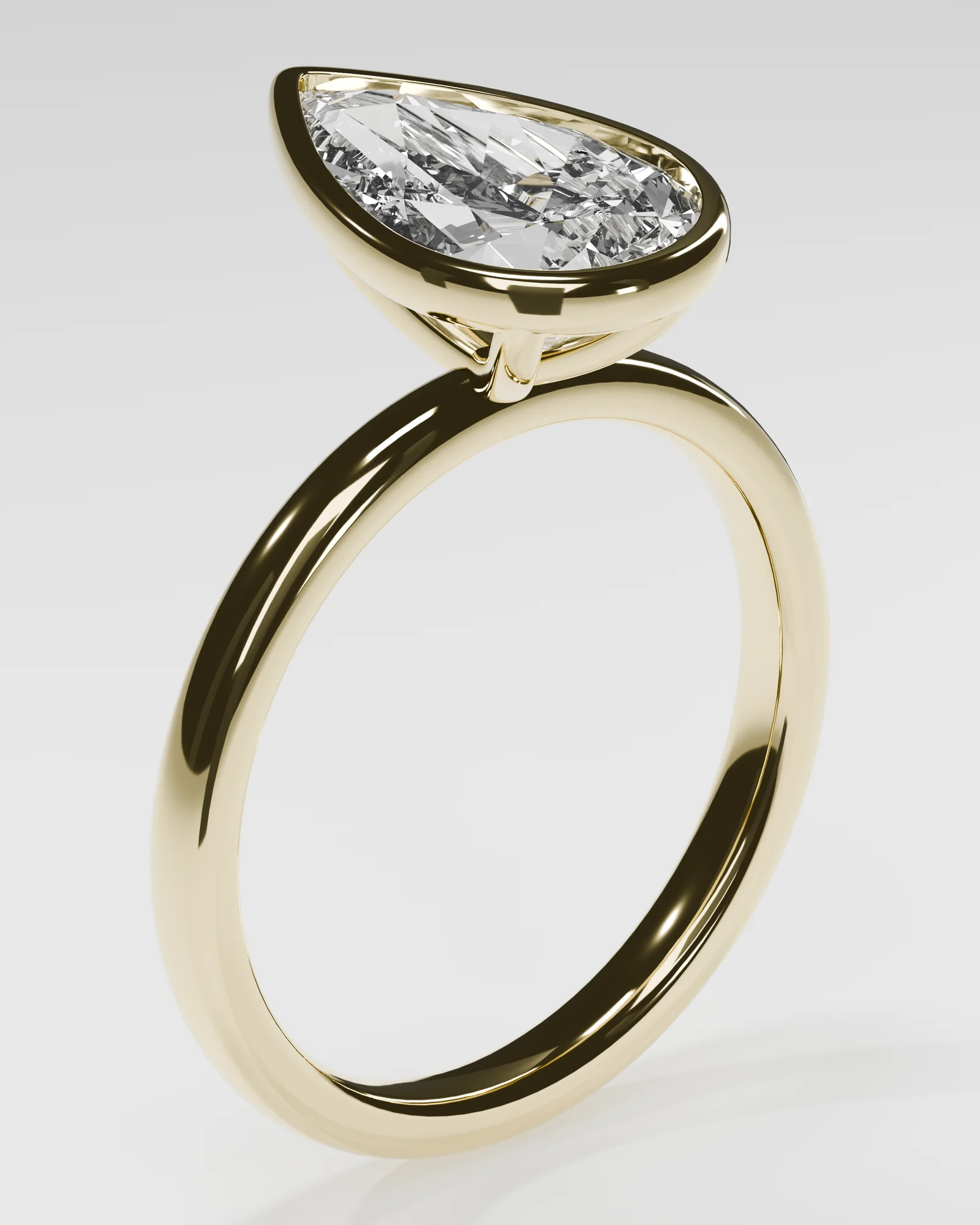
A pear diamond is rounded at one end and pointed at the other, like a teardrop, and it combines the brilliance of a round with the length of a marquise. Our pear designs are made in 18 carat gold, with a claw that protects the point, around a natural or laboratory-grown stone.

Why people choose a pear

The teardrop outline is soft and distinctive. Worn with the point towards the fingertip it lengthens the hand; turned the other way, it feels more unusual.

Pear diamonds also pair well with side stones. Two smaller pears pointing outwards, as in our Pear Sonata, make a three stone ring with a gentle taper.

Choosing the stone

Look for a ratio of about 1.45 to 1.75, a rounded top without flat shoulders, and a point that lines up with the centre of the curve. Pears can show a bow tie across the middle, so it is best to compare a few stones by eye.

Choosing the setting

A V-shaped claw at the point is essential. Beyond that, a simple solitaire shows the outline best, while a hidden halo or a pavé band adds sparkle without changing the shape.

Good to know

Pear Engagement Rings: your questions

Which way should a pear diamond point?

Traditionally towards the fingertip, which lengthens the hand. Pointing it towards the wrist is a personal choice and equally correct.

Is the point of a pear diamond fragile?

It is the most delicate part, so we protect it with a V-shaped claw. Set that way, a pear is suited to everyday wear.

What is a good length-to-width ratio for a pear?

About 1.45 to 1.75 for the classic shape. Lower ratios look fuller, higher ratios slimmer.

Can I have a pear with side stones?

Yes. Pear side stones, round accents or a pavé band all suit a pear centre. Our Pear Sonata uses two smaller pears pointing outwards.

Can a pear engagement ring be lab-grown?

Yes. Every design can be made with a natural or laboratory-grown pear diamond in 18 carat gold.